
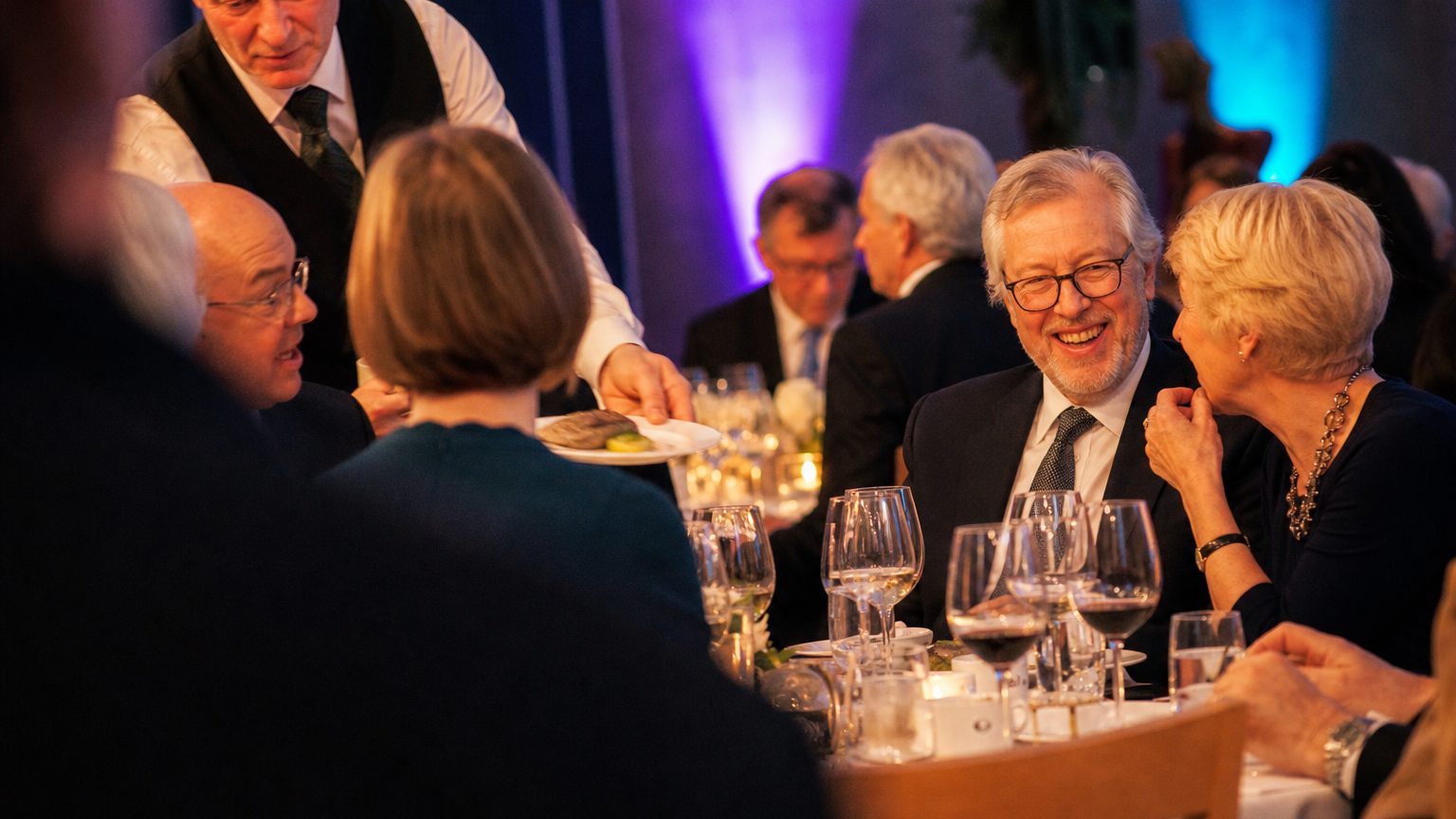
The corporate banquet is one of the highest-stakes meal moments in any program — the closing-night gala, the customer-summit dinner, the awards-ceremony reception. It’s also one of the most-frequently overengineered (long programs, multiple courses, too many speeches) and underdesigned (generic plated dinner, no signature moment). This guide is the working banquet-design framework we use with corporate clients — the discipline that produces banquets attendees remember, not banquets they endure.
(For the broader F&B framework that informs banquet design, see our companion guide on event menu design.)
Start With the Banquet’s Job in the Program
The first design question isn’t “what’s the menu” — it’s “what is this banquet doing for the program.” Different banquet moments have different jobs and different design implications:
Closing-night gala at a sales kickoff or annual summit: the program’s signature memory moment. Worth investing in production, ambient design, and signature menu elements. This is the meal attendees describe to colleagues afterward.
Awards / recognition dinner: the meal is the staging for the recognition program. Menu and production support the recognition narrative without competing with it.
Customer-summit dinner: relationship-focused. Smaller tables, longer time at the table, intentional seating to facilitate customer-team conversations. Menu is good but is not the focal point.
President’s Club / incentive-program dinner: thank-you and recognition for top performers. The menu and venue choice signal the company’s investment in the recognition. Per IRF and SITE research on incentive-program recall drivers, the closing-night dinner appears consistently in attendee post-program recall and is one of the strongest signals of program tier.
Venue Selection: On-Property vs. Off-Property
The default assumption — host the banquet at the program’s host hotel — is often the right call for operational reasons but is frequently not the best banquet experience available.
On-property banquet works well when: the host hotel has high-quality banquet space and catering; the program’s logistics make off-property complicated; the program already has a signature off-property element elsewhere.
Off-property banquet works well when: the destination has named restaurants or venues that meaningfully outperform the host hotel; the program’s signature memory moment justifies the logistics; attendee count supports buyout pricing at a destination venue.
Per BizBash industry coverage of corporate-program signature moments, off-property dinners at named destination venues consistently appear in attendee program recall at materially higher rates than on-property banquet experiences. The logistics are harder; the recall payoff is meaningful.
The Banquet Run-of-Show
Most corporate banquets fail in the same way: too many speeches, too long, poorly paced. The working banquet run-of-show framework:
Reception (60-90 minutes) with passed hors d’oeuvres, bar service, and a clear signal mechanism for moving guests to seating. This is the social warm-up; not the place for speeches.
Seated dinner with 1-2 speech moments maximum. The opening welcome (60-90 seconds) and one anchor moment (3-5 minutes). Anything beyond that competes with the meal and the conversation.
Recognition / awards program if applicable, designed for energy maintenance. Most corporate awards programs are designed for the awarded employees and run too long for everyone else. Per IRF research on recognition-program design, awards programs that exceed 30 minutes consistently see attendee energy and engagement drop materially.
Signature moment — entertainment, special dessert presentation, surprise element. Not a generic DJ-and-dancing close; something specifically designed for this program.
Open dancing / late-night programming if appropriate to the audience and program tier.
Menu Design for Banquets
The banquet menu serves the program’s stakes; it doesn’t substitute for them. Working principles:
3-4 courses is the sweet spot. 5+ courses extends the program too long; 2 courses feels insufficient for the moment. Most corporate banquets land at appetizer / salad / main / dessert (4 courses) or appetizer / main / dessert (3 courses).
Wine pairing optional, deliberate if included. Per-course wine pairings extend dinner time meaningfully; programs designed for short-duration banquets often run a single wine selection paired to the main.
Dietary-inclusive design. See the companion menu design guide for the dietary-inclusion discipline. The banquet is the highest-stakes meal moment; dietary mishandling here is the most visible.
Signature dessert moment. A presentation-style dessert (tableside flambé, parade of pastry, themed dessert station) is consistently among the highest-recall elements of a banquet. Cost is modest relative to other line items; impact is meaningful.
Production and Ambient Design
The room design materially impacts the banquet experience. Working principles:
Lighting is the largest controllable. Most hotel ballrooms come with bright-flat-overhead fluorescent lighting. Investing in lighting design (uplights, table-level candles, gobo lighting, color washes) materially transforms the room. Cost typically $5,000-$25,000 depending on room size and design complexity; impact is substantial.
Sound design. Music selection that fits the program’s tone, properly mic’d speech moments, ambient sound during dinner-conversation portions.
Tablescape design. Centerpieces, place settings, menu cards, name cards. The default hotel-banquet linens-and-centerpiece package is usually undistinguished. Modest investment in tabletop design ($30-$80 per place setting beyond hotel standard) materially improves the dining experience.
The Banquet Cost Math
Per BizBash industry cost data and our own client benchmarks, total per-attendee banquet investment at mid-enterprise corporate programs typically runs:
Standard ballroom banquet: $150-$300 per attendee inclusive of food, beverage, and basic ambient design.
Premium ballroom banquet with stronger menu, wine pairing, and enhanced production: $300-$550 per attendee.
Off-property destination banquet at a named venue: $400-$900 per attendee inclusive of venue rental, F&B, transport, and production.
Premium incentive-program banquet with full signature-moment production: $600-$1,500 per attendee.
The Banquet Mistake to Avoid
One common pattern that consistently produces forgettable banquets: trying to do everything in 90 minutes. The compressed banquet — reception, seated dinner, awards, dancing — in a single 90-minute window produces a rushed, low-recall experience. Programs that give the banquet room to breathe (2.5-3.5 hours from reception start to last service) consistently land better with attendees than programs trying to maximize content density.
If you want help designing a banquet moment that meets the stakes of your corporate program, our team can help. We’ve designed and executed banquet experiences across the destinations we work in, with relationships at both host-property catering teams and off-property destination venues.
Related reading: Event menu design — the broader F&B framework.
Related reading: Incentive travel programs — banquet moments at incentive-program scale.