
The quietest signal that a roadshow is working shows up around stop three. The content has stopped being a script. Your presenter knows which slide draws the skeptical question in Chicago and pre-empts it in Dallas. The AV crew sets the room in forty minutes instead of ninety. That compounding competence is the thing a single annual summit never gets, because a summit happens once and then everyone goes home to debrief about what they would fix next year.
A company roadshow is a sequenced program, usually three to ten cities over a few weeks, where the same content and brand experience is delivered live to a different audience in each market. Each stop is a full production with its own venue, AV, catering and guest list. The program team travels. That is the distinction that matters, and it is the one most often blurred.
What follows is the working framework we use with roadshow clients: when the format earns its cost, when a single-venue program beats it outright, how to pick cities with pipeline data rather than regional sales preference, and what to do in the 48 hours after each stop. For the day-of execution discipline underneath all of it, our in-person event operations playbook covers the ground-level work, and the chartering-through-closeout framework covers program-level project management.
What a Company Roadshow Actually Is
The label gets stretched to cover anything with more than one location. A corporate roadshow has three defining traits: consistent content, distinct audiences per stop, and a traveling core team.
Three things wear the same name and should not. An investor roadshow is a capital-raising circuit, built around a banker’s calendar and a fixed deck that legal has blessed, where the room is twelve people and nobody gets a lanyard. A consumer experiential tour is a branded truck in a parking lot optimized for footfall and social impressions. A B2B company roadshow is neither. It is a pipeline program with a guest list you built from your own CRM.
It is also not a flagship event with regional watch parties piped in. That is a hybrid program, a genuinely good format for different reasons, which we get into in our running notes on event trends. And it is not a trade show circuit, where you rent floor space inside someone else’s audience. On a roadshow you own the room, the list, and the agenda.
Adoption has climbed since 2022 across B2B technology, financial services and life sciences. Skift Meetings has tracked the broader shift toward smaller, more frequent, regionally distributed corporate programs as travel budgets came under scrutiny and willingness to fly cross-country for a one-day agenda softened.
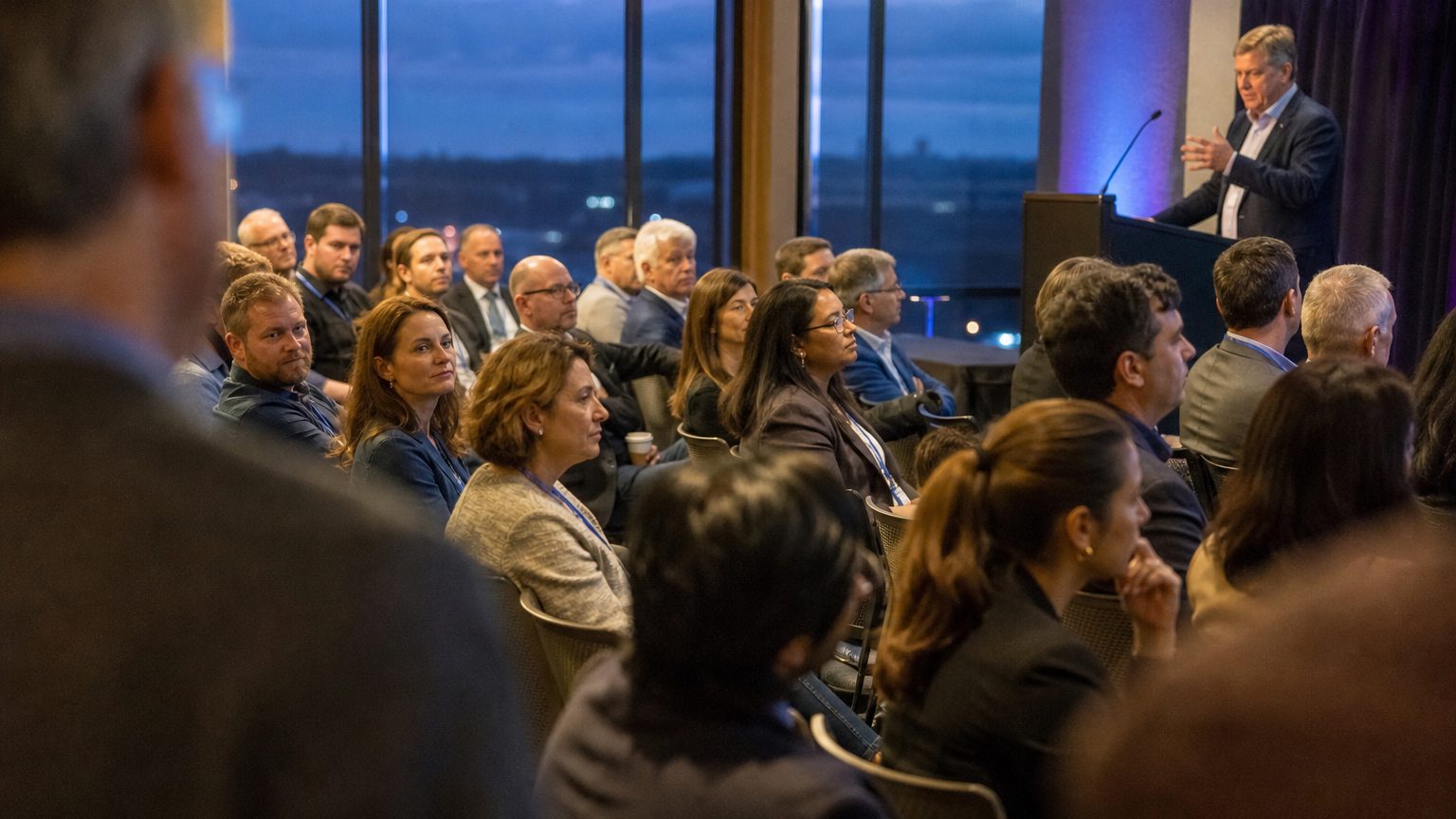
The Purpose of a Roadshow: Four Reasons the Format Holds Up
It goes to the audience instead of taxing them
Most enterprise B2B companies have customer concentration in four to eight metros: New York, the Bay Area, Chicago, Boston, Atlanta, Dallas, Los Angeles, and increasingly Austin and Denver. Asking a director-level buyer to burn two travel days on a half-day program is a hard ask. Asking them to drive twenty minutes is not. The purpose of a roadshow, at its simplest, is removing the travel tax from attendance.
The economics scale differently
A roadshow trades total attendee volume for reach efficiency. You will not put 800 people in a room. You will put 80 to 150 in each of six rooms, and those 80 skew far more heavily toward actual buyers, because the attendance barrier filtered for intent rather than for travel approval. Cvent’s event industry research has consistently shown regional and mid-size formats outperforming large national events on qualified-attendee percentage.
Sales gets structured time in its own territory
This is the underrated one. A roadshow stop gives the regional team a reason to call every open opportunity in the market at once, with something to offer other than a check-in. IRF research on sales and event integration has repeatedly found that programs pairing customer-facing content with direct sales-team activation report stronger measurable business impact than programs keeping the two separate.
Repetition sharpens the content
Your first stop is a beta test with real customers in the room, which is terrifying and also the point. By stop four the demo has been re-sequenced, the weakest case study has been cut, and the Q&A handling is tight. One failure mode to watch: teams that refuse to change the deck after stop one because it was “approved.” That is a wasted iteration loop, and you paid for it in airfare.
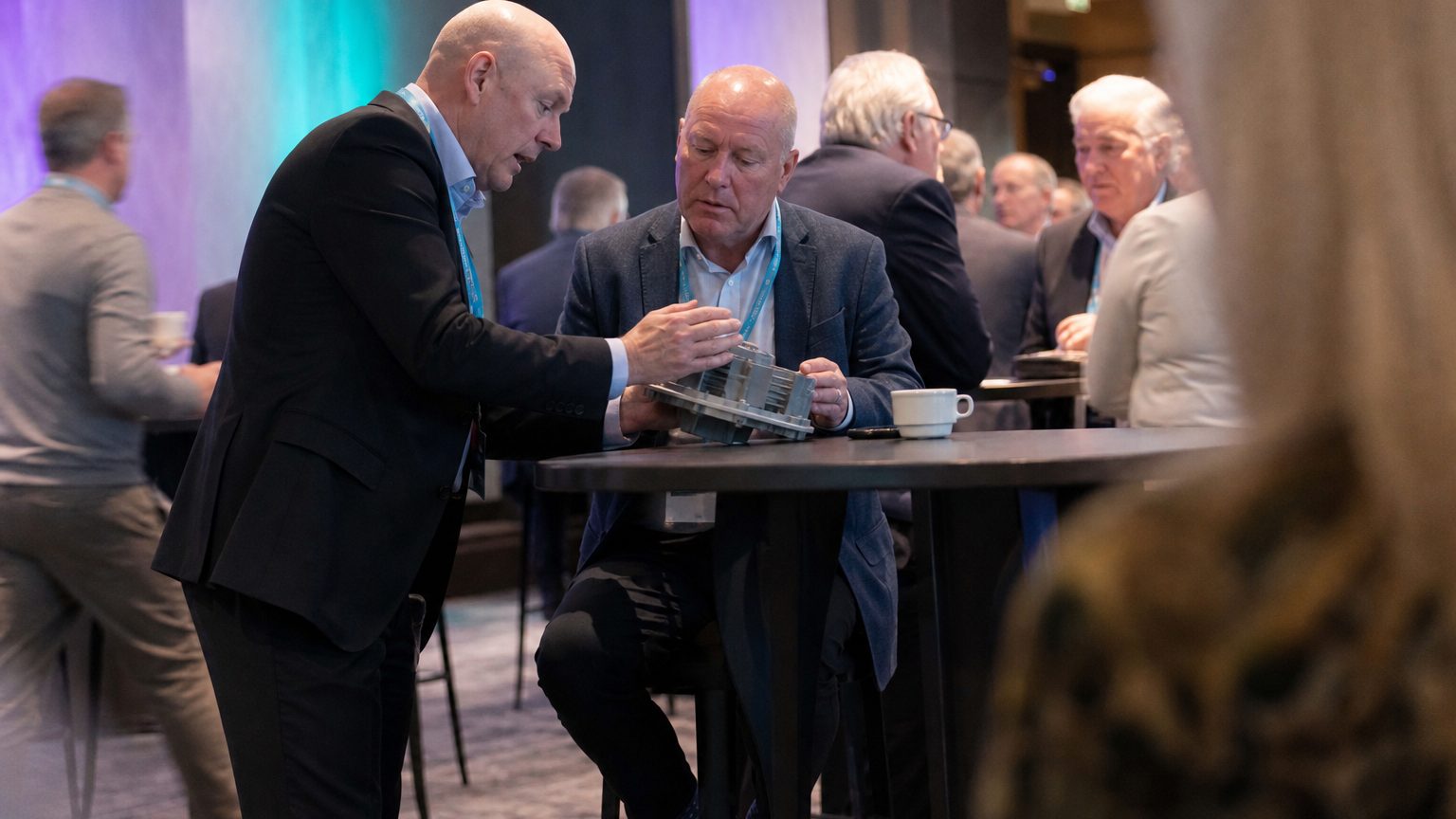
When a Roadshow Beats a Single Summit
Run the roadshow when your buyers cluster geographically, the content is presenter-led rather than set-dependent, and the goal is pipeline coverage across named markets. Product launches with regional buyer density, customer education programs, channel partner enablement, and the classic investor relations circuit all fit cleanly.
Three situations where it is the wrong call:
| Scenario | Why it fails | Better format | Tell |
|---|---|---|---|
| attendee-to-attendee networking is the product | 80 to 150 people per stop is too thin for network effects | one national summit | your survey quotes are all about who they met |
| heavy built set, video walls, multi-room programming | production cost repeats at every stop with nothing amortized | single venue, build once | your production quote carries a custom stage line item |
| executives can only clear one date | a roadshow needs the same senior faces in six cities over three weeks | single venue, one travel day | your CRO’s assistant has already declined two of the six dates |
Roadshow Planning: The Three Decisions That Set the Outcome
Pick cities from the CRM, not the org chart
Export open pipeline and active customer accounts by metro, then rank. The list that comes back is rarely the list the regional VPs lobbied for. Layer in two filters: nonstop air access for your traveling team, and venue supply at your room size. Midtown Manhattan and downtown San Francisco command premium venue terms and tighter availability than Atlanta, Dallas or Charlotte, which is a scheduling constraint as much as a budget one. Our notes on US destinations that work for group programs are a reasonable starting shortlist. Then sequence stops to minimize backtracking: East Coast cluster, Midwest, Texas, West Coast, in that order, with a dark day before the final market.
Fill the room one market at a time
A central email blast to a national list will not fill six regional rooms. The pattern that works is layered: personal outreach from the local rep to named accounts first, an account-targeted email sequence second, and a local partner or association co-promotion third. Invite roughly three times your target headcount per market, because registered-to-attended on free regional B2B events runs well below what planners expect. Our guide to marketing an event properly covers the sequencing in detail. What to watch out for: a market where registrations are strong but all from one account. That is a customer briefing wearing a roadshow costume, and it should be rescheduled as one.
Protect the traveling team
Three stops in three days is a logistics decision that gets made in a spreadsheet and paid for in a tired presenter. Two stops a week, with a travel day between, holds quality through week three. Ship a hard case of the essentials, including your own HDMI adapters and a backup clicker, and treat every hotel’s in-house AV quote as a starting position rather than a fact.
Measuring It: KPIs and Pipeline Attribution
Measure per stop, not per program, or you will never learn which markets deserve a return visit. Four numbers carry the weight: attended-to-registered rate, percentage of attendees from target accounts, meetings booked within seven days, and influenced pipeline by city at 90 days. Tag every attendee record with the stop, not just the campaign, before the first invite goes out. Retrofitting attribution after stop five is miserable, and the data will be wrong anyway.
Set a pipeline-coverage target per market before you book the venue. If a city cannot plausibly produce it, that city is a dinner, not a stop.
The 48 Hours After Each Stop
Follow-up decays fast. Our rule is that every attendee gets a sales-owned, non-templated touch within 24 hours and no later than 48, while the reps are still in market and the conversation is still fresh. The content recap email can wait a week. The human one cannot. Reps who wait until the full tour wraps to work their leads are effectively handing a two-week head start to whoever your prospect met next.
Run a fifteen-minute debrief that same night: what question came up twice, what broke in the room, what to cut. Log it. That is how stop three starts sounding like it was written for the audience.
Choosing an Agency for Multi-City Roadshow Production
Agencies that are excellent at one large annual conference are not automatically good at six medium ones in eighteen days. The evaluation criteria are different. Ask for a reference from a client whose program ran five or more cities, and ask that reference specifically about weeks two and three, when the crew is tired and the shipping is late.
| Criterion | What to ask | Red flag |
|---|---|---|
| travel model | who physically travels, and are they the same people at every stop | a new local freelance lead in each market |
| vendor depth by market | named venue and AV relationships in your actual cities | sourcing every market cold from a directory |
| data handoff | how attendee data reaches your CRM, tagged by stop | a spreadsheet emailed after the tour |
Multi-city work lives or dies on repeatable systems, which is the same discipline behind our conference and meeting planning services, applied six times in a row instead of once. If you want to know how our team thinks about program ownership before you shortlist anyone, our background is here.
If you are scoping a 2027 roadshow, the useful conversation starts with your pipeline map and your date constraints, not with a venue list. Send us the markets you are considering and the outcome you need from each, and we will tell you honestly whether the format fits, how many stops it should be, and what the sequence ought to look like. Talk to our team and we will scope it with you.
Related reading: Company Retreat Planning: A 2027 Operator’s Guide.