The “should we go back to in-person?” question is mostly settled for corporate events. Per PCMA’s most recent Convene survey data, in-person corporate event attendance is now meaningfully above 2019 baselines, and the share of corporate programs running fully virtual has dropped into the single digits. The harder question — the one we actually get asked by clients now — is how to run an in-person corporate event well in 2026–2027, when attendees have higher expectations and the operations playbook has changed in real ways since 2019.
This is the working playbook we use with corporate clients across the kinds of in-person programs we plan most often — sales kickoffs, customer summits, leadership offsites, user conferences. It’s not exhaustive; it’s the parts that matter most and the parts that have actually shifted since the 2019-era playbooks.
Pre-Event Planning — Start Earlier Than You Think
The sourcing timeline has compressed in attendee expectations and expanded in property availability. Both directions matter.
Venue sourcing: 12–18 months out. The post-2022 corporate meetings recovery has pushed prime weeks at Tier 1 properties into the 12–18 month booking window — significantly tighter than the 6–9 month window planners worked with in 2018–2019. Per Cvent group business demand reporting, this isn’t temporary; it’s the new baseline. If your 2027 program isn’t in active sourcing by spring 2026, expect to be working with the second-choice properties.
Vendor procurement: 6–9 months out. AV/production vendors, F&B contracts, attendee transportation. The category-wide capacity constraint here is harder than venue — there are fewer mid-market AV teams than there were pre-2020, and the good ones are booked out.
Attendee communications: 8–12 weeks ahead. Save-the-dates 8–12 weeks before the event, full registration opens 6–8 weeks ahead, agenda and travel logistics 3–4 weeks ahead, day-before reminders 24 hours ahead. The communication cadence that worked in 2019 (one save-the-date + one travel-info email) consistently under-performs the multi-touch cadence now.
Pre-event content / pre-work: 3–4 weeks ahead. The mistake we still see most often: planners running content-heavy programs without assigning pre-work. For SKOs and customer summits especially, pre-work assigned 3–4 weeks ahead consistently shows up in higher Day-1 engagement scores. BizBash has tracked this trend across event categories.
Day-Of Execution — Where Programs Actually Win or Lose
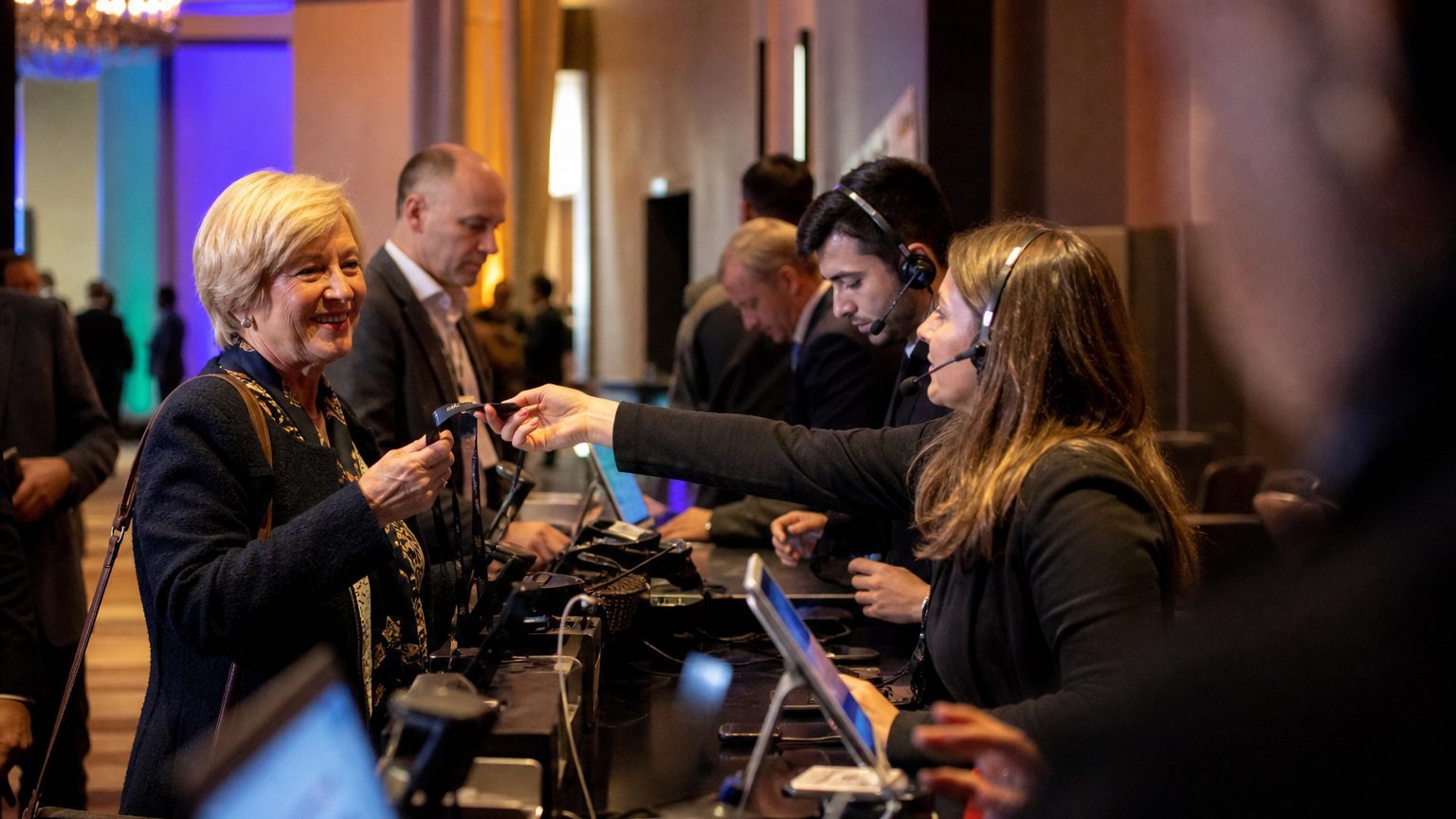
Registration flow: design for the first 10 minutes. The arrival experience sets the program tone. The friction modes we see most often (long check-in lines, badge printing failures, unclear wayfinding to general session) are all solvable with: pre-printed badges, mobile check-in via QR code, dedicated greeters at the property entrance, and printed agenda cards for the first day. Per Skift Meetings industry coverage, mobile check-in is now the default at most enterprise corporate events.
Sponsor management: scope the touch points. If your event has sponsors, the sponsor touch points (booth space, sponsored sessions, sponsored meals) are where things go sideways most often. The fix is unglamorous: a single point of contact on your team for each sponsor, a printed run-of-show with sponsor commitments mapped to specific times, and a 24-hour-prior walkthrough with each sponsor’s lead.
Content delivery: design for energy management. The post-pandemic attention-span shift is real — sessions that ran 60 minutes in 2019 now lose 30% of the room past minute 45. Build your agenda around 30–40 minute content blocks with structured break time between. The energy curve through a multi-day in-person event matters more than any single session’s content.
F&B: budget 10–15% above 2019 numbers. Per BizBash’s annual industry cost surveys, F&B costs at corporate events have climbed meaningfully since 2022. Plan accordingly. The cheap-out moves (reduce the breakfast spread, skip the afternoon snack) consistently come back as low scores on the post-event survey.
Post-Event — The 90 Days That Matter Most
The single biggest reason corporate in-person events don’t deliver measurable program lift, per IRF research on corporate kickoffs, is that nothing reinforces the program theme after attendees fly home. Three things that compound:
Recap content within 48 hours. Photos, key session takeaways, links to slides and recordings. The window for attendee mindshare closes fast.
Manager-led debrief at 2 weeks. For SKO and customer-summit content, the manager check-in at the 2-week mark is where the program either lands or doesn’t. This is on the program owner to design — most managers will skip it if not prompted.
Quarterly reinforcement tied to the theme. Not a one-time recap — a sustained cadence over the 90 days post-event. The investment math is straightforward: a $3K-per-attendee SKO that loses its lift by week 4 is significantly worse ROI than a $3K-per-attendee SKO whose theme is still operative at week 12.
What’s New for 2027
Three trends worth designing around:
AI-assisted attendee operations. Mobile event apps with AI matchmaking (Brella, Whova) are now mainstream for B2B events 200+ attendees. The right use case: facilitating qualified attendee-to-attendee meetings (sponsor-buyer, peer-network-building) without manual coordinator overhead.
Hybrid-as-amplification, not hybrid-as-format. The full hybrid format (in-person + live virtual stream) has mostly fallen out of corporate events — the format compromises both audiences. The pattern that’s working: in-person core program, post-event on-demand content for the broader audience who didn’t attend live.
Increased food cost transparency. Attendees notice the F&B quality at a different level than they did in 2019. The cheap-out moves stand out more. Plan F&B as a real program component, not a residual line item.
If you want help running an in-person corporate program — from sourcing through execution through 90-day reinforcement — our team can help. We’ve staffed everything from 40-person leadership offsites to 1,500-person customer summits.
Related reading: 2027 President’s Club destination guide — for the top-performer reward that compounds a strong corporate event program.