
Corporate event planning in Chicago is a procurement exercise before it is a venue-selection exercise. A vibes tour of the Loop and the West Loop with a few venue photos is fine if you are planning a birthday party. It is malpractice if you are scoping a 400-person national sales meeting, or a client event where your CFO is going to line-item the invoice.
Chicago is one of the top three corporate meetings markets in the U.S. — Choose Chicago’s meetings team puts the city among the leaders for citywide conventions, and PCMA consistently ranks it near the top for large business events. That scale is the reason the market works. It’s also the reason the sticker price on a venue quote is roughly half of what you’ll actually spend.
This guide is built for the planner or sales-ops lead who has to defend the budget to finance. We’ll walk through the Chicago tax stack, union jurisdictions at the big rooms, how planners actually price their work, the neighborhoods worth their premium (and the ones that aren’t), and how to measure whether the program did anything for the business.
The Chicago tax and labor stack most planners miss
Venue selection is the easy half. The tax and labor structure underneath the quote is what turns a clean number into a 30% surprise, and it is the fastest way to lose a program to Nashville or Dallas without ever understanding why.
The tax layers on top of every quote
Hotel tax includes city, state, MPEA and sports facility surcharges. A further 1% MPEA restaurant tax applies in the central zone.
Chicago stacks taxes across hotel, F&B, and entertainment in a way most other Tier 1 cities don’t. The combined hotel accommodations tax runs around 17.4% once you add city, state, MPEA, and sports facility surcharges. Food and beverage inside the downtown restaurant district runs 10.25% sales tax plus a 1% additional MPEA restaurant tax in the central zone. And the 9% amusement tax hits ticketed entertainment, some venue rentals, and streamed content — a detail that has bitten more than one hybrid event budget.
On a program with a room block, a plated dinner, and an entertainment element, the tax load alone typically adds 12-15% to the base program figure. If your finance team is comparing Chicago to Dallas or Phoenix using pre-tax quotes, you’re comparing apples to a slightly more expensive apple that also happens to be wearing a tax coat.
Union jurisdictions at the big rooms
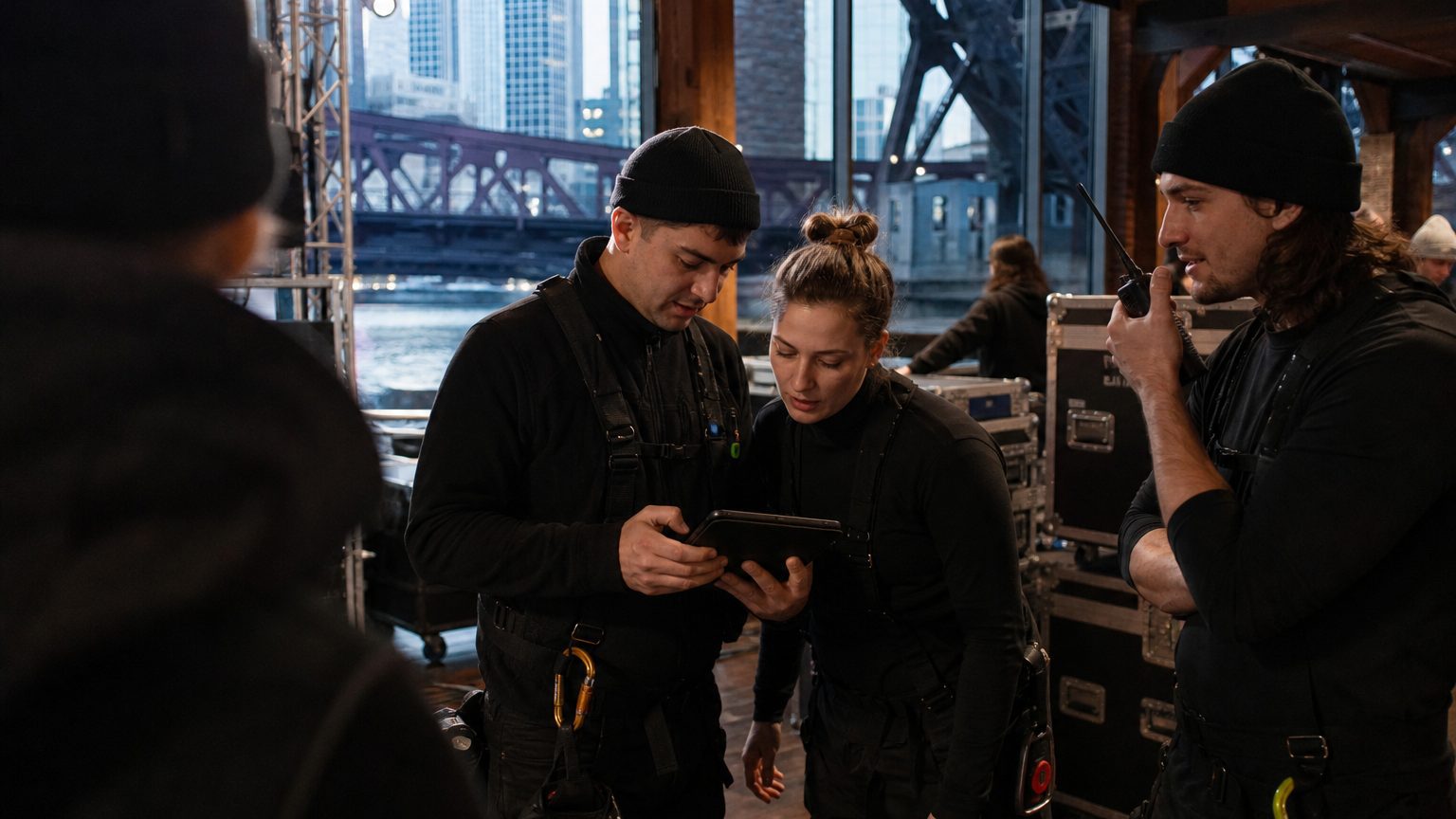
McCormick Place and Navy Pier are union houses. So are most of the historic downtown ballrooms once you cross a certain production threshold. The trades you’ll encounter include Teamsters (freight, forklift), IATSE Local 2 (stagehands, lighting, audio), Carpenters Local 1027 (booth build, staging), and Electricians Local 134 (power). Each has its own jurisdiction, its own overtime rules, and its own minimum call.
The McCormick Place exhibitor rules have been reformed over the years to allow exhibitors more self-setup for small booths, but the moment you’re rigging, running power, or moving anything heavier than a hand-carried case, you’re on the clock with a trade. A four-hour minimum call at overtime rates is the norm, not the exception. Build union labor into your budget as a line item at the start, not as a discovery at load-in.
The service-charge and gratuity fine print
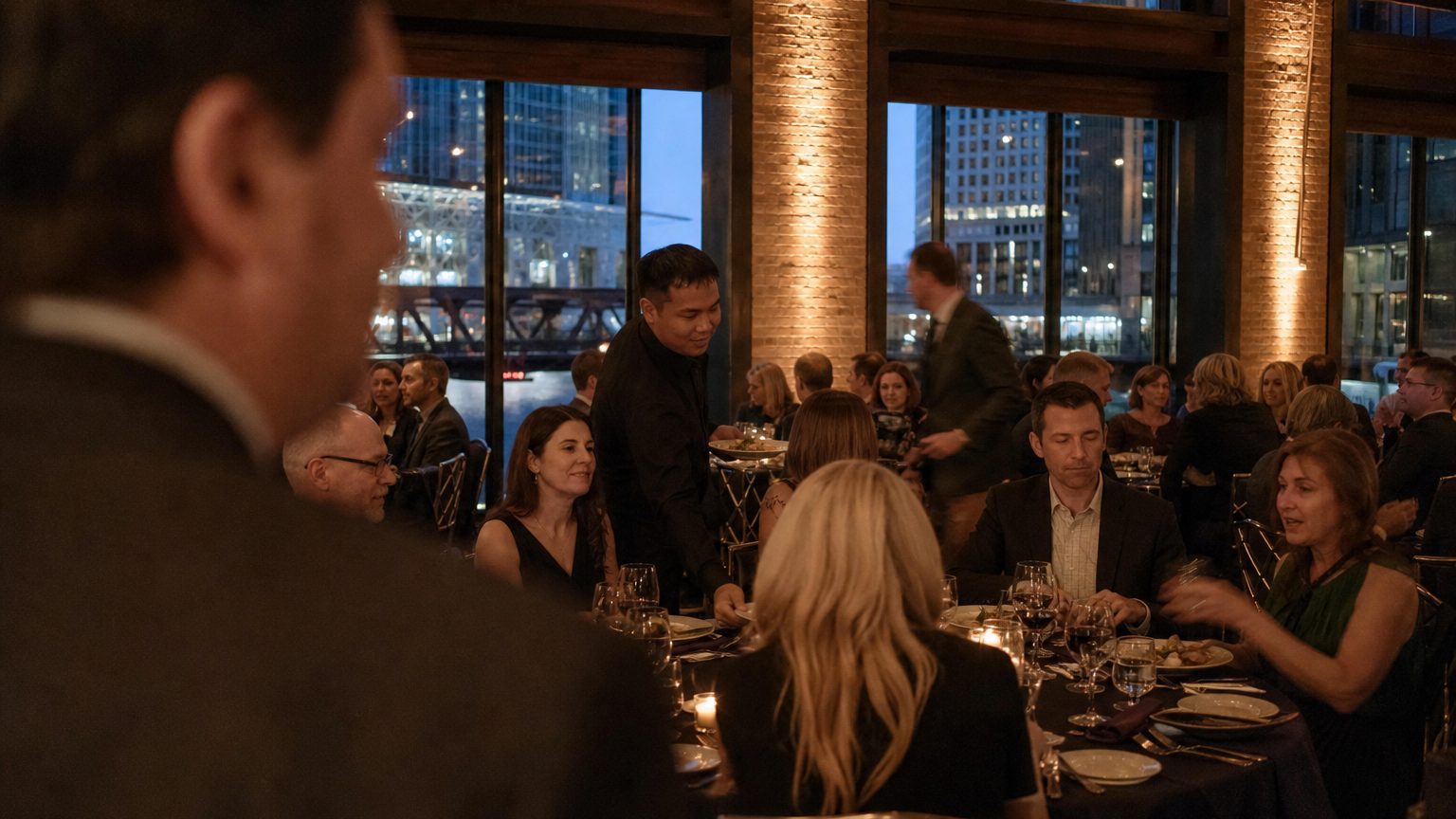
Chicago hotel and venue F&B contracts routinely carry a 24-26% service charge on top of the menu price, and that service charge is itself taxable. Some venues split the charge between an administrative fee (taxable, not gratuity) and a service charge (may or may not go to staff, depending on the contract). Read the definitions. We’ve seen a 26% “service charge” that was 100% house margin and required a separate gratuity line to actually tip the banquet team.
How Chicago planner engagement models actually work
How planners charge is rarely spelled out. That’s not an accident — planners like it opaque because it makes comparison harder. Here’s the honest breakdown.
- Flat project fee. A fixed number for a defined scope. Good for buyers who want predictability and have a clean scope. Bad when scope creeps, because every change is a change order.
- Percentage of managed budget. Typically a percentage of total program spend. Good when scope is fuzzy. The obvious conflict: the planner is incentivized to spend more. A good planner will disclose this and cap it.
- Cost-plus / management fee. Planner passes through vendor costs at net and charges a management fee on top. This is the model most transparent operators prefer for larger programs because it separates their pay from the vendor spend.
- Hourly. Rare for full programs, common for advisory work or à la carte production support.
Ask, in the RFP, which model the planner uses and what their markup structure looks like on hotel commissions, DMC referrals, and AV. If a planner tells you they charge “nothing” because the hotel pays them a commission, you are the product. That’s not automatically bad, but you should know.
Neighborhoods: where the money goes and where it hides
Downtown-equals-prestige is the reflexive advice in every listicle. It’s not wrong. It’s also not always right.
The Loop and Streeterville
Walk-to-hotel access, big-brand properties (Fairmont, Hyatt Regency, Sheraton Grand), close to O’Hare via CTA. Highest tax exposure, highest F&B floors, highest union load. Right answer for citywides, national sales meetings where out-of-town attendees fly in, and any event where the C-suite optics of “downtown Chicago” pay for themselves.
West Loop / Fulton Market
The design-forward option. Restaurant-driven, warehouse-conversion venues, close to Union Station. This is where you go when the brand story is “innovative” and you want the dinner to feel like a private restaurant, not a hotel ballroom. Watch for parking constraints and load-in windows that don’t accommodate large trucks.
North Shore, Rosemont, Oak Brook
Here’s the contrarian read: for a 150-person program where most attendees are driving in from the Midwest and you don’t need the downtown skyline for the deck, Rosemont or Oak Brook often beats downtown on total attendee cost. Free parking, lower room rates, no city amusement tax, and quicker O’Hare access for the fly-ins. We’ve moved regional sales kickoffs out of the Loop to Rosemont and cut the total program cost meaningfully without a single attendee complaint. The skyline is a great photo. It’s a lousy line item if nobody needed it.
The venues we keep coming back to (and when we don’t)
A short, opinionated list. Not exhaustive.
- McCormick Place. Only answer for anything over roughly 2,500 attendees. Union house. Long load-in. Not intimate — don’t put a 300-person meeting here just because you can.
- Navy Pier / Aon Grand Ballroom. Iconic lakefront, strong for gala-style dinners in the 800-1,500 range. Union. Weather is a real risk for shoulder-season programs.
- Fairmont Chicago, Millennium Park. Reliable ballroom stack, capable banquet team, good for 300-800 corporate meetings. Rooms are dated by luxury standards but the service recovers it.
- The Geraghty (Pilsen). Blank-canvas warehouse, big enough for 1,000+ receptions. Buildout costs are real; nothing is included.
- Adler Planetarium. Buyout dinner venue with the skyline as your backdrop. Capacity ceiling and catering exclusivity constrain it, but for a client event that has to feel like Chicago, it’s hard to beat.
- Salvage One, Morgan Manufacturing, Loft Lucia. West Loop / near-West production venues for 150-400 people. Character over convenience.
What to watch out for: any venue quoting an all-in package that doesn’t itemize AV, service charge, tax, security, and required in-house labor. “All-in” almost always excludes something you’ll pay for later.
Full-service planner vs. à la carte: an honest comparison
Every full-service agency will tell you a full-service model is the right answer. It often is. It also isn’t always.
For programs under about 150 attendees where the company has an in-house corporate events lead who can own the timeline, an à la carte model — hire a production partner for AV and staging, a venue-provided coordinator for F&B and rooms, and a DMC only for transportation and offsites — routinely comes in 20-30% under a full-service quote. The trade is that your in-house lead is now the general contractor. If that person is capable and has bandwidth, the savings are real.
For programs over 250 attendees, multi-city footprints, incentive-travel logistics, or anything requiring a President’s Club-caliber attendee experience, full-service is usually the right call. The coordination cost of managing eight vendors yourself will eat any fee delta and then some. This is the same trade-off we walk clients through in our conferences and meeting planning work, and it’s the same conversation we have when a Chicago corporate client also runs a program out of Texas — our Dallas event management team sees the same pattern in that market.

Building a Chicago RFP that gets real answers
A vague RFP gets a vague quote. Here’s the short list of questions that separate operators from order-takers.
- What is your engagement model (flat, cost-plus, percentage, hourly), and what does your fee include vs. exclude?
- Do you take commissions from hotels or DMCs? If yes, are they rebated to the client or retained?
- Which Chicago venues have you personally operated in the last 24 months? Names, headcounts, dates.
- Who is the on-site lead for our program, and what other programs do they run in that same month?
- How do you build the union labor line in a McCormick or Navy Pier program? Show us a sample.
- What’s your F&B negotiation approach — do you push for menu customization at the contracted minimum, or do you accept the venue’s standard package?
- How do you handle attrition and cancellation clauses in the hotel contract?
- What’s your process for measuring post-event ROI, and what tools do you use?
- Can you share three references from Chicago programs of similar scale in the last 18 months?
- Who owns the attendee data after the program closes?
If a planner can’t answer the union and tax questions with specifics, they haven’t run enough Chicago programs to be your partner on one.
Measuring corporate event ROI in Chicago
Every planner claims “ROI-focused.” Almost nobody defines it. The IRF ROI Toolkit and MPI Meetings Outlook both give real frameworks. Pick one and commit to it before the program, not after.
Three metric sets we use, depending on program type:
- Conferences and user events: pipeline attribution (opportunities created or advanced within 30/60/90 days), attendee NPS, session-level engagement, content downloads post-event. Cvent and similar platforms will tie registration data to Salesforce if someone actually sets up the integration — the tool doesn’t do it by accident.
- Client entertainment: account-level engagement lift, renewal or expansion rate on attending accounts vs. control, qualitative account-team feedback in the 60 days after.
- Internal culture / SKO / President’s Club: retention delta on attendees vs. non-attendees over 12 months, pulse-survey engagement scores, quota attainment lift on the following cycle. SITE’s research on incentive travel consistently shows retention and engagement lifts that dwarf the program cost when measured this way.
What to watch out for: measuring only satisfaction (“attendees loved it”). Satisfaction is table stakes. If that’s all you can prove, finance will cut the budget next cycle.
Sustainability and DEI standards buyers are now requiring
Corporate procurement teams increasingly require sustainability and DEI reporting as part of the vendor onboarding for events.
Expect to be asked about certified-diverse vendor spend, waste diversion at the venue, F&B sourcing (local, seasonal, plant-forward options), carbon estimates for attendee travel, and accessibility standards beyond the ADA minimum. BizBash’s sustainability coverage is a decent starting point, and MPI’s Sustainable Event Professional Certificate is the credential most enterprise buyers now recognize. Ask your planner what percentage of their Chicago programs in the last year tracked these metrics. If the answer is zero, they’re going to learn on your program.
What to lock in for a 2027 Chicago program
For a 2027 Chicago program of 300+ attendees, the timeline that actually works looks like this: venue and hotel contracts signed 12-15 months out (so, roughly now for late-2027 dates), production and creative locked 8-10 months out, registration open 5-6 months out, room block released 30-45 days out. The “6-12 months” advice you’ll see repeated on generic pages is fine for a 75-person offsite. It’s not enough runway for a peak Q2 or Q4 Chicago citywide.
Peak Q2 (April-June) and Q4 (October-early December) are the hardest booking windows in Chicago. If your dates are flexible, a January or late-summer program will get better rates, more venue availability, and more attention from your operating partner. Shoulder-season Chicago is a real lever.
Working with J.Shay on a Chicago program
If you’re scoping a 2027 Chicago corporate program — sales kickoff, client event, President’s Club dinner, national meeting — we’re happy to walk through the tax and labor math on your specific footprint, share references from comparable programs, and give you an honest read on whether we’re the right partner or whether an à la carte model fits better. Get in touch here and we’ll set a call.