
Event logistics is the discipline of making the program run cleanly across hundreds of small operational details — venue setup, vendor coordination, attendee flow, materials staging, AV cueing, F&B timing, transport coordination, on-site team management. The conventional pattern is to treat logistics as a 16-step checklist with each step weighted equally. The pattern that produces operationally-clean programs is treating logistics as a system — interconnected dependencies, named owners, documented handoffs, and pre-built backup plans for the predictable failure modes.
This guide replaces the listicle approach with the working logistics framework we use with corporate clients — the operational disciplines, the named-owner pattern, and the friction modes that consistently surface across programs.
(For the broader operations framework, our corporate conferences and meeting planning page covers the full scope.)
The 5 Operational Domains
Logistics breaks into five domains that operate semi-independently but share critical dependencies. Mapping work into these domains (rather than into a flat 16-step list) makes the named-owner assignments cleaner and the backup-plan documentation more rigorous.
Domain 1: Venue Operations
Room setup, signage, registration desk configuration, breakout-room layouts, room-flip schedules between sessions, AV staging, electrical and rigging. The on-property piece. Named owner is typically the venue’s convention services manager paired with the agency-side production lead.
Domain 2: Attendee Experience Flow
Arrival, registration, badging, materials distribution, session navigation, networking-moment facilitation, on-site comms, off-property transitions. The pieces attendees directly interact with. Named owner is typically the agency-side attendee experience lead, with venue-side staffing support.
Domain 3: Content and Production
Speaker preparation and run-of-show, AV cueing, video and graphics, livestream/hybrid production, content packaging for post-event reuse. Named owner is typically the production partner (in-house or contracted), reporting into the agency-side production lead.
Domain 4: Food, Beverage, and Vendor Operations
F&B at meal moments, break stations, vendor coordination for off-property elements, dietary-restriction protocol, alcohol service compliance. Named owner is typically the venue’s catering manager paired with the agency-side F&B coordinator.
Domain 5: Transport and Off-Property
Airport transfers, in-destination shuttles, off-property venue logistics, off-property programming coordination. For incentive and international programs, this domain is typically handled by the DMC partner.
The Named-Owner Pattern
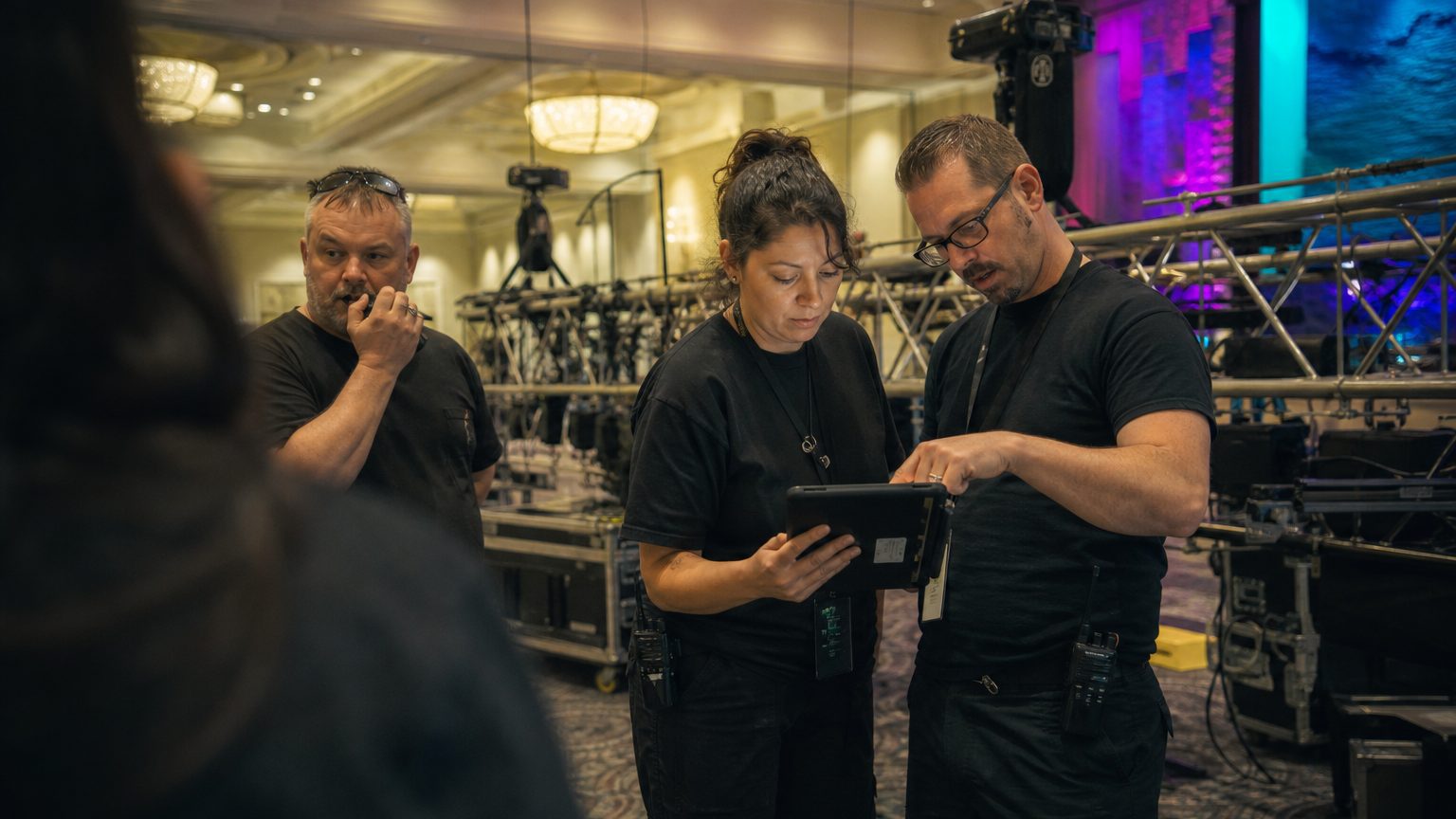
The single highest-impact discipline in event logistics is named ownership for every operational pillar. Per the Project Management Institute research on cross-functional project execution, programs with explicit named ownership at the domain level consistently produce fewer mid-program operational issues than programs running flat checklists with shared ownership. Each of the 5 domains above has one named owner; that owner is the escalation point during the program for any issue in their domain.
The pattern that doesn’t work: a single “event lead” responsible for everything. The cognitive load is too high, the decision-making backlog builds quickly during program execution, and avoidable issues compound. The 5-domain split with named owners is a meaningful operational improvement.
The Documented-Handoff Discipline
Most program-day operational issues happen at handoffs — between agency and venue, between agency and DMC, between content team and AV team, between F&B and service staff. The discipline that consistently reduces handoff failures:
Written handoff documents for each domain-to-domain interaction. Not a passing verbal mention — a documented record of what’s being handed off, who’s receiving, what the success criteria are.
Named handoff times in the run-of-show. Every handoff has a time on the timeline. “1430 — F&B confirms afternoon break service is ready” is on the document; “F&B sometime in the afternoon” is not.
Backup-plan documentation for every handoff. What happens if the handoff doesn’t land? What’s the contingency? Who’s the escalation contact?
The Predictable Failure Modes
Across hundreds of corporate event programs, the same failure modes consistently recur. Pre-built backup plans for these specific modes meaningfully reduce program-day friction:
Outdoor program elements meeting weather. The backup-plan discipline here is non-negotiable: contracted indoor backup space, weather-monitoring discipline 7 days out, named decision-maker on the indoor/outdoor call, attendee comms protocol for the change. Per BizBash industry coverage of outdoor-event protocols, weather-driven program failures are typically driven by inadequate backup planning, not by the weather itself.
Severe-allergy attendee dietary incident. The mitigation discipline: severe-allergy flagging at registration with venue catering notified 5+ days pre-event, color-coded place settings or wristbands, named allergen-aware service team member, kitchen-side prep discipline documented.
AV / production failure during a keynote. The mitigation discipline: backup audio path, backup display path, presenter-side backup laptop, run-of-show with named cue contingencies. Most production teams have these as standard practice; verifying they’re in place is the agency-side responsibility.
Transport vendor failure. The mitigation discipline: backup transport partner identified pre-program, contact info in the run-of-show, contingency budget allocated.
Speaker cancellation 24-48 hours out. The mitigation discipline: backup speaker identified (typically a senior internal leader who can be activated), backup content path that doesn’t require the cancelled speaker, attendee comms approach if format change is needed.
Registration platform issue at on-site check-in. The mitigation discipline: paper backup of the attendee list, on-site team trained on manual check-in protocol, named platform-side escalation contact.
The Operational Discipline That Matters Most
Of the disciplines above, the single highest-impact is the pre-program walkthrough. The agency-side production lead, the venue’s convention services manager, and the AV/production partner walk the program physically in the days before the event — checking each transition, each handoff, each backup plan. Per the industry coverage of event-program operational quality, programs that complete a documented walkthrough 24-72 hours before the program consistently produce fewer on-site operational issues than programs that walk through only mentally or on paper.
Run-of-Show Document Discipline
The run-of-show is the central operational document for any corporate event. The discipline that makes it actually useful:
Time-block resolution at the 5-minute level for high-density program segments, 15-minute for lower-density. Programs with run-of-shows resolved only to the hour have less operational precision than the program needs.
Named owner per line item. Each time-block entry has a named operational owner.
Cue protocol documented. Who calls cues, what the cue language is, how cues are communicated (radio, headset, signal).
Backup paths inline. The backup plan for each major segment is in the run-of-show next to the primary plan, not in a separate document.
The Logistics Mistake to Avoid
One pattern we’d push back on: treating logistics as a vendor-coordination exercise rather than an integrated system. Programs that hand off “the logistics” to a junior planner with a vendor list and a 16-step checklist consistently produce programs with avoidable operational issues. The discipline scales with program complexity — at $250K+ programs, treating logistics as a system with named-owner discipline is the difference between operationally-clean and operationally-friction-laden execution.
If you want help structuring the logistics framework for your next corporate program, our team can help. We run logistics at the system level across the program categories we work in.
Related reading: Event planning anti-checklist — the outcome-mapped milestone framework that logistics fits into.
Related reading: What is a DMC? — the on-the-ground operational partner for international and incentive programs.