Trade show exhibition has matured back into a real corporate marketing channel since the 2020–2022 disruption, but the format that worked in 2019 doesn’t deliver the same booth-ROI in 2026–2027. Per EXHIBITOR Magazine’s annual cost-per-lead surveys, the average B2B trade show CPL has held above $200, which has tightened the math on what’s worth investing in at the booth and what isn’t. This guide covers the exhibition trends actually moving on the floors we’re staffing right now.
(For the specific giveaway items that earn their CPL, our trade show giveaway ideas guide covers the item-by-item rundown. This guide is about the broader booth strategy.)
1. Booth Footprint Strategy Has Shifted Toward Mid-Size
The post-2022 cost climb in trade show exhibition has changed the booth-size math. The historical “go big or go home” logic — anchor 40×40 or 80×80 footprints — has softened. Per BizBash industry coverage, the share of mid-size booth footprints (20×20 to 30×30) has grown materially as a percentage of total B2B exhibitor spend, while the giant footprints have shrunk slightly.
The reasoning is practical: a 30×30 booth at well-designed traffic-flow can deliver 70%+ of the qualified meeting volume of an 80×80 booth at less than half the cost. The diminishing returns past 30×30 on lead volume are sharper than most exhibitor budgets account for.
2. Lead Capture Has Moved to Mobile-First QR
The badge-scanner-and-paper-form era is over for serious B2B exhibitors. Per Skift Meetings industry coverage, mobile-first lead capture (iCapture, Cvent LeadCapture, AtEvent, Stova LeadCapture) is now standard at enterprise trade show booths. QR-code-based attendee profile capture, mobile-app-driven qualifying questions, and direct CRM routing have replaced the post-show data-entry batch processes that historically lost 30%+ of leads to data quality issues.
The booths still using paper lead forms or basic badge scanners consistently lose qualified meeting opportunities to mobile-equipped competitors who can route a qualified lead to the rep’s calendar within 10 minutes of the conversation.
3. Sponsorship Pricing at Major Shows Has Climbed Faster Than Booth Cost
The sponsored-element pricing structure at the major B2B trade shows (CES, NAB, Dreamforce, HIMSS, RSA, SaaStr) has climbed 30–50% in the past three years per the published exhibitor packets we’ve reviewed across categories. Anchor sponsorship tiers (keynote sponsorship, hotel key card sponsorship, registration-page sponsorship) now run six to seven figures at the largest shows.
The smart exhibitor pattern that’s emerged: skip the anchor sponsorship tiers, invest the budget delta into a higher-quality 20×20 booth + multiple lower-tier sponsorships (a hospitality suite, a sponsored breakfast, a coffee bar) that put your team in front of qualified attendees in lower-friction settings. The aggregated impressions and meetings consistently outperform the single big-ticket sponsorship at the same total spend.
4. Booth Design Has Moved Toward “Conversation Rooms”
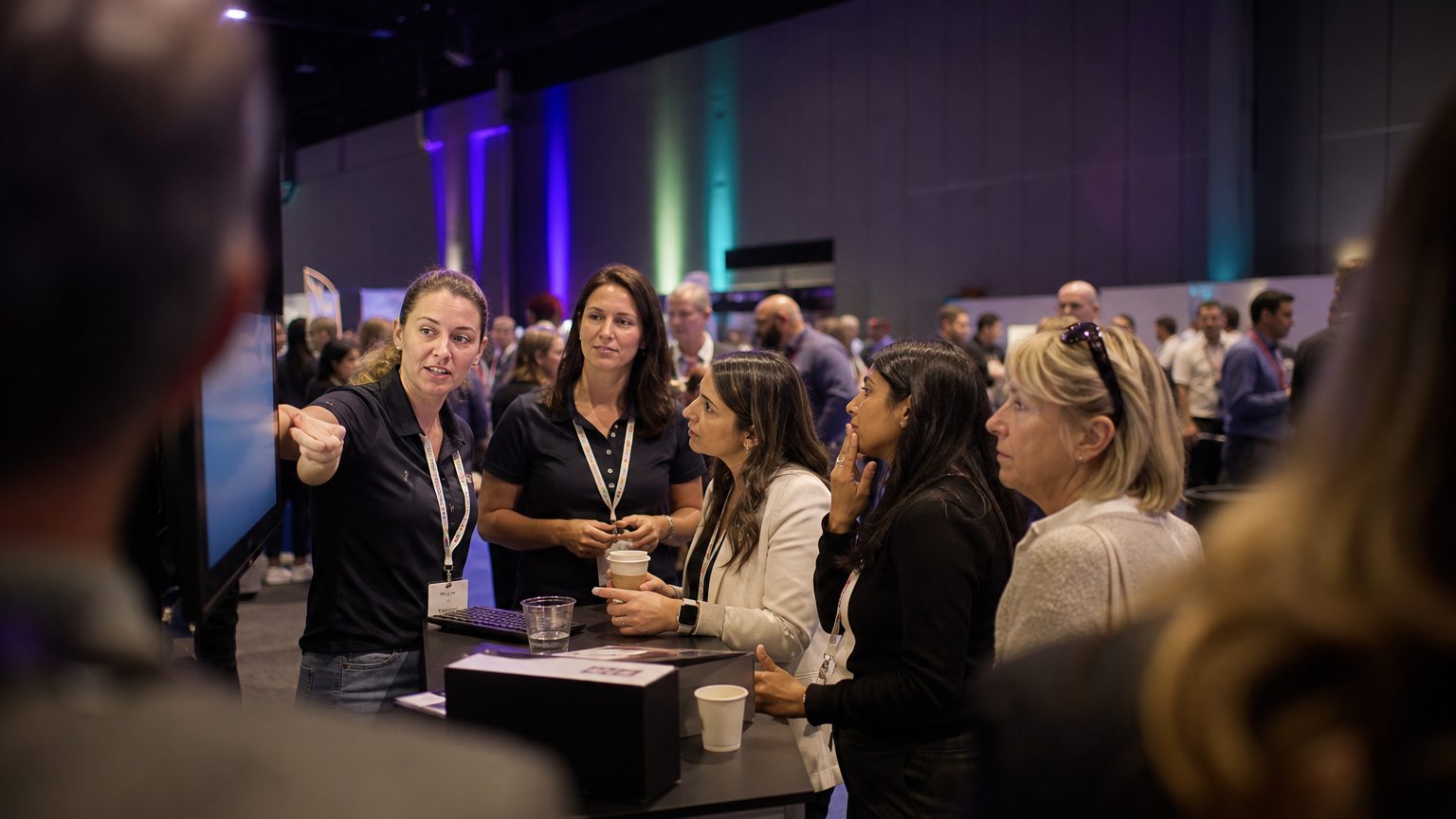
The traditional exhibition booth design — open floor with product demos and signage walls — is being replaced at the higher-performing booths by what BizBash trade show coverage calls “conversation rooms”: semi-private seating areas inside the booth footprint that facilitate longer qualified meetings rather than walk-by demos.
The conversion math is straightforward: 8 qualified 15-minute conversations per day with sales-ready prospects consistently out-performs 80 walk-by demos at the same booth staff investment. The conversation-room booth design optimizes for the former; the demo-wall booth design optimizes for the latter. For most B2B exhibitors at considered-purchase stages, the conversation rooms are the right call.
5. AI-Driven Attendee Matchmaking Is the New Pre-Show Investment
The pre-show investment that’s moving fastest is AI matchmaking — using show registration-platform data to pre-schedule qualified attendee meetings before the show floor opens. Brella, Whova, Bizzabo’s matchmaking layer, and the major show platforms (Cvent for B2B summits, Informa for trade shows) all ship attendee matchmaking now. The exhibitors using it consistently report 40–60% of qualified meeting volume coming from pre-scheduled meetings vs walk-up booth traffic.
The booths still relying entirely on walk-up traffic are missing the structural shift: the qualified buyers at most B2B trade shows now plan their meeting schedule before they arrive, and the booths that aren’t on their pre-set agenda get less of their attention.
What’s Not Working
Two patterns we’d push back on:
VR / AR demos as primary booth attraction. The category has had its moment. Per EXHIBITOR Magazine’s coverage of the trend across 2022–2024, VR/AR booth attractions consistently rate lower on qualified-meeting generation than conventional product demos paired with conversation rooms. The category is fine for sponsor activations at consumer events; it’s mostly off-trend for serious B2B exhibition.
Generic giveaway-volume strategies. The “we ordered 5,000 logo’d water bottles” approach consistently under-performs the qualifying-conversation-first approach (covered in depth in our giveaway ideas guide). High-volume cheap swag is one of the most over-budgeted line items in trade show exhibition.
The Cost Math for 2027
For a 20×20 B2B booth at a mid-major trade show (typical example: SaaStr, RSA, HIMSS-tier):
Booth space + electrical + drayage: $25K–$60K depending on venue.
Booth build + branded signage: $35K–$80K (custom build) or $15K–$30K (modular).
Staff travel + accommodations: $15K–$30K for a 6-person team.
Lead capture + AI matchmaking platforms: $5K–$15K.
Giveaway / swag program: $5K–$15K (targeted, not volume).
Total per-show budget: $85K–$200K for a serious 20×20 presence.
The CPL math against the typical 80–150 qualified leads a 20×20 generates at a mid-major show: roughly $600–$2,500 per qualified lead, which is broadly defensible for B2B sales motions with $50K+ average deal sizes.
If you want help building a trade show exhibition strategy that ties to your specific sales motion and qualified-lead targets, our trade show management team can help. We’ve staffed everything from 10×10 first-time exhibits to 80×80 anchor booths across the major B2B and industry trade shows.
Related reading: Trade show giveaway ideas — the item-by-item booth swag rundown.
Related reading: 2027 President’s Club destination guide — for the B2B sales team that’s earning the qualifying conversations at the booths.
Related reading: Corporate Event Catering Trends.