
Here’s the honest answer most guides bury under 1,200 words of job description: you should hire a meeting planner when the cost of getting it wrong exceeds the cost of the planner. That sounds glib, so let me make it concrete. Once you cross roughly 50 attendees, add a second day, or add a second city, the number of things that can quietly go sideways stops being a to-do list and starts being a full-time job. That’s the trigger. Not the size of your company, not your title, not whether you “feel” busy.
So here is a decision framework keyed to real triggers, the actual fee ranges you’d pay in 2027, a worked ROI example, and the part that usually goes missing: when you should not hire one.
For context on why this matters at all, the U.S. meetings and events industry is measured at well over a trillion dollars in annual economic impact, according to the Events Industry Council’s economic significance study. Meetings are not a rounding error. They’re a line item worth getting right.
The decision framework: concrete triggers, not vibes
Skip the “signs you might need help” listicles. Here are numeric triggers. If you hit two or more, hiring a planner almost always pencils out.
- Attendee count of 50+. Under 50, a competent internal owner with a good venue contact can usually run it. Over 50, room blocks, dietary tracking, transport, and name badges compound faster than one part-time owner can absorb.
- Multi-day. A single-afternoon meeting is a logistics sprint. A three-day agenda with evening events, breakouts, and off-site dinners is a marathon with fifteen vendors.
- Multi-city or multi-country. The moment you add a second country, you inherit currency, contracting, VAT, and time-zone coordination. This is where healthcare and pharma programs, with their compliance overlays, become nearly impossible to run off the side of someone’s desk.
- Budget above roughly $75,000. At that level, a planner’s negotiated savings frequently cover their own fee. Below it, the math is tighter and worth checking.
- Zero internal bandwidth. If the person who’d “own” this already has a full-time role, you’re not saving money by keeping it in-house. You’re borrowing against their actual job.
What to watch out for: the sneakiest trigger is the “small” internal meeting that grows. A 40-person quarterly review becomes a 90-person leadership offsite three weeks before the date because someone in the C-suite added their team. We’ve seen this happen enough times that we now ask clients about the ceiling headcount, not the current one.
What a meeting planner actually owns
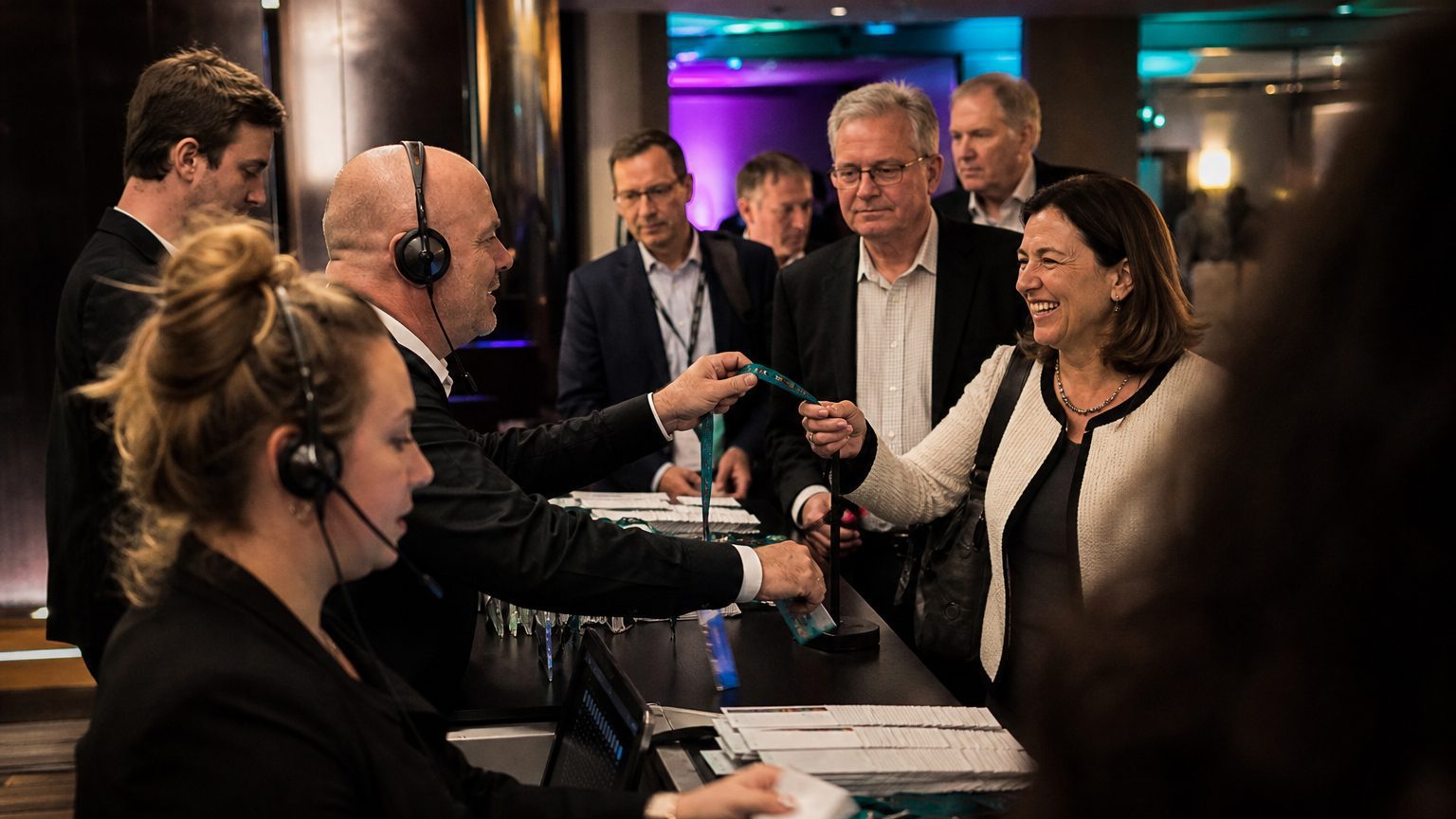
You know the basics, so we’ll be brief. A planner runs sourcing and site selection, negotiates the hotel and vendor contracts, manages the budget, handles registration and attendee communications, coordinates F&B and AV, and stands on-site to catch the fires you never hear about. If you want the fuller picture of how this works across larger programs, our conference and meeting planning approach lays out the moving parts.
Full-service vs. day-of coordination
You don’t have to choose between “hire a full-service agency” and “do it all yourself.” Day-of or month-of coordination is a real, lower-cost tier: you handle sourcing and planning, and a coordinator takes over execution in the final weeks so you’re not running the show and attending it at the same time. For a straightforward single-site meeting under 100 people, this can cost a fraction of full-service and still keep you sane on event day.
Virtual and hybrid meetings
If your program includes a virtual or hybrid component, the planner’s job shifts toward platform selection, moderated Q&A, and keeping remote attendees from becoming wallpaper. Engagement drops off a cliff when the remote audience is an afterthought, which is why we treat virtual event production as its own discipline rather than a webcam pointed at a stage.
What it actually costs in 2027
Here’s where every competitor goes quiet. There are two entirely different pricing worlds, and no one reconciles them.
The in-house world
If you’re staffing a salaried role, the median meeting planner salary sits around $56,000 per year in the U.S., with contract hourly rates in the $19 to $37 range, per Zippia’s meeting planner data. That’s the right number if you run 20+ programs a year. It’s the wrong number if you have one annual sales kickoff.
The agency and freelance world
For a one-event client, you’re not buying a salary. You’re buying one of three fee models:
| Fee model | Rate | Notes |
|---|---|---|
| Hourly | $75–$250 | Roughly $75 to $250 per hour depending on seniority and market. |
| Flat project fee | $2,000–$50,000+ | Commonly $2,000 to $50,000+ per project depending on scope, per DesignRush’s event management pricing. A flat fee is the most common model; Northstar Meetings Group reporting has put flat-fee use around 39% of planners, with percentage-of-budget a minority approach. |
| Percentage of budget | 10–20% | Typically 10 to 20% of total program spend. |
What to watch out for: percentage-of-budget pricing can create a quiet incentive to spend more, since the fee rises with the total. We prefer flat or scoped fees for exactly this reason, and if a planner pushes percentage-only, ask them to walk you through how they protect your budget.

The ROI math, with an actual example
“Planners save you money” is the industry’s most repeated unbacked claim. Let’s do the arithmetic instead. The savings come from real levers: negotiated room rates, F&B minimums, waived attrition, and vendor discounts. Independent estimates put vendor savings from planner relationships at around 10% or more, and documented catering-savings cases have reached 30%.
Take a 120-person, two-day meeting with a $180,000 budget. Say the F&B portion is $60,000. A 20% catering reduction, from renegotiating the reception night and trimming the plated dinner to a station format, saves $12,000. A 10% cut on the $70,000 room block via a rate you couldn’t access alone saves another $7,000. That’s $19,000 in hard savings. Against a flat planner fee of $12,000, you’re net positive by $7,000, and you never touched a contract yourself. That’s the case for hiring, and it’s a case you can actually verify with your own numbers rather than taking on faith.
The soft ROI is real too. Incentive and meeting programs are consistently shown to lift engagement and performance when executed well, which is a recurring theme in IRF research on program effectiveness. Poorly executed ones do the opposite, which is the whole point of not winging it.
When you should NOT hire a meeting planner
No competitor writes this section, which is exactly why it builds trust. There are real cases where hiring one is overkill:
- Under 50 attendees, single day, single site, low compliance. A capable internal owner with a decent venue relationship can run this. Spending 10 to 20% of a small budget on a planner may not clear the ROI bar.
- You have a genuinely experienced in-house team with open bandwidth. If someone on staff has run this exact meeting five times and has room on their plate, you already have your planner.
- Recurring, templated internal meetings. A monthly all-hands in your own office doesn’t need outside help. It needs a checklist.
- The budget is so tight that any fee breaks it. If a $3,000 fee is the difference between happening and not, consider day-of coordination or a scoped hourly engagement instead of full-service.
What to watch out for: “we’ve always done it ourselves” is not the same as “we do it well.” Look at last year’s post-event survey scores and the hours your team actually sank into it. If the meeting ran fine but three people worked nights for a month, you didn’t save money. You hid the cost in payroll.
How to vet a planner if you decide to hire
Credentials that mean something
The CMP (Certified Meeting Professional), administered through the Events Industry Council, is the credential worth asking about. It signals a baseline of experience and a passed exam rather than a self-declared title. It’s not everything, but it filters out the truly green.
Questions that actually reveal skill
Ask for a specific save-the-day story, a failure and what they learned, and how they’d handle your exact compliance or headcount scenario. References from clients with programs like yours matter more than a glossy portfolio of weddings if you’re running a pharma advisory board. You can get a sense of how we think about this kind of work by reading who we are and how our team operates.
Define success before you sign
Agree on the metrics up front: attendee satisfaction targets, a post-event survey plan, budget variance tolerance, and lead or pipeline goals if it’s a commercial meeting. A planner who asks how you’ll measure success is one who intends to be measured. That’s the one you want.
Putting it together
Count your triggers. Two or more, and the money almost always works, especially once you run the ROI math on your own budget rather than trusting a slogan. One or zero, and you may be better served by day-of coordination or your own team. Either way, decide on triggers and numbers, not on whether the week feels busy.
If you’re weighing a 2027 or 2028 program and want a straight read on whether a planner pencils out for your specific numbers, talk to our team. We’ll walk your headcount, budget, and goals and tell you honestly whether you need us, a coordinator, or just a good checklist. We’d rather give you the real answer than the flattering one.