
Event budgeting is harder than it was in 2019. Per the latest BizBash industry cost surveys and PCMA Convene research, the input costs to a corporate event — venue F&B, AV, talent, travel, sponsorship — have all climbed 15–35% above 2019 baselines, while corporate marketing budgets in most categories have grown roughly half that fast. The math has tightened. The planners who consistently get their programs funded are the ones who treat budget defense as part of the program design, not a separate conversation after planning is done.
This guide is the working budget-defense playbook we use with corporate event clients — the cost reality benchmarks, where the cuts can come from (and where they can’t), and the budget-presentation pattern that wins program approval.
(For the broader project-management discipline that this budgeting fits into, our event planning best practices covers the full chartering-through-closeout framework.)
The Cost Reality — What Inputs Have Actually Done Since 2019
Per the BizBash 2024 industry cost survey and the cross-industry meeting cost data MPI publishes in its quarterly Meetings Outlook, here’s where input costs sit relative to 2019 baselines for typical mid-enterprise corporate events:
Venue room rates: +20–35% in major U.S. metros, +10–20% in second-tier cities.
F&B minimums: +15–25% across categories.
AV/production labor: +25–40% (the largest single category climb, driven by post-2020 talent attrition).
Travel + accommodations: +15–30% depending on routing.
Talent / keynote speaker fees: +10–20% for established speakers; rising-tier speakers more variable.
Sponsorship buy-side pricing at major shows: +30–50%.
The implication: the same program you ran in 2019 for $250K probably costs $310K–$360K in 2027. The planners getting their programs approved are the ones who can defend this delta with specific inputs, not pass it through as a general “things cost more” line.
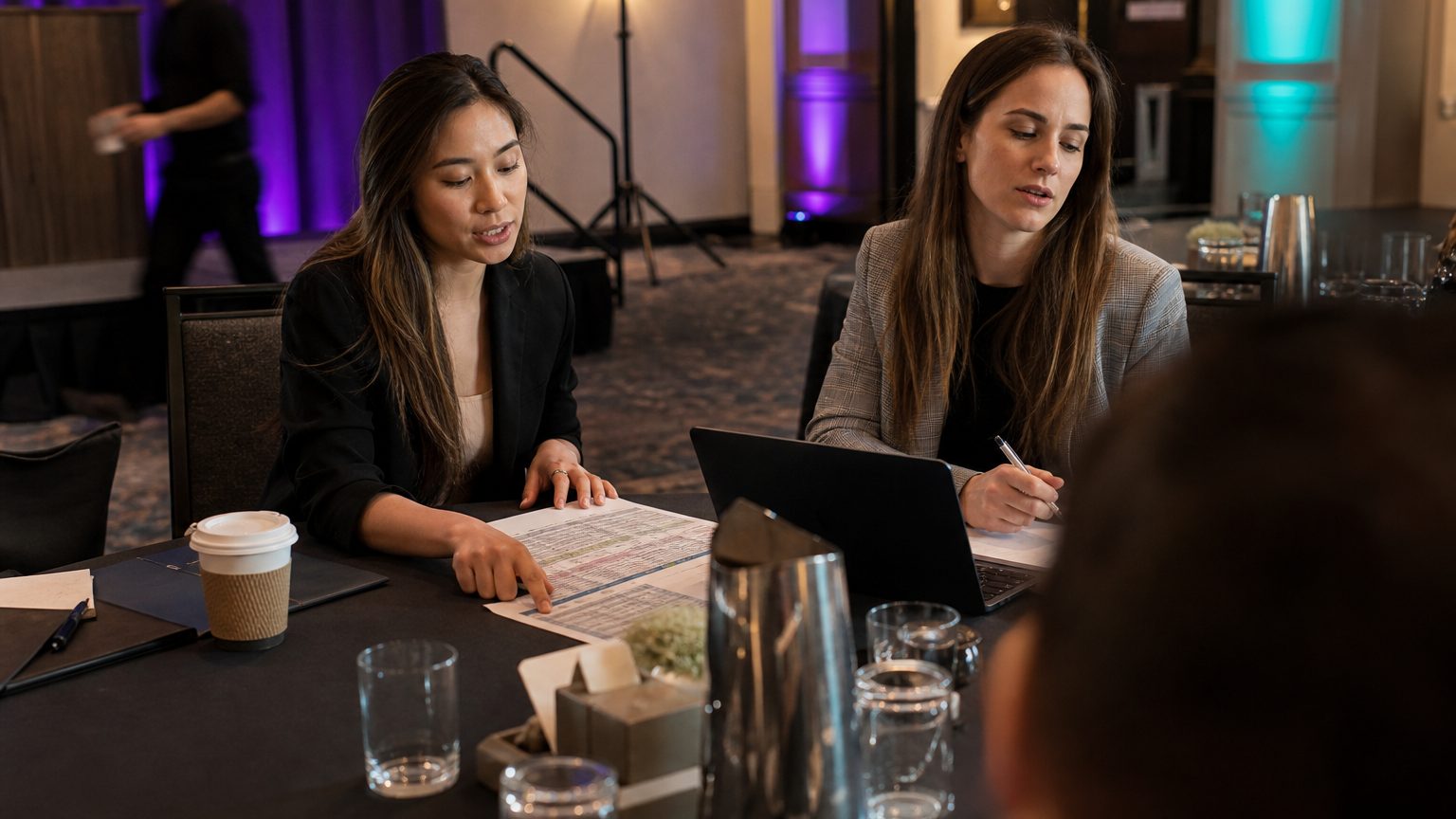
The Budget Defense Pattern That Works
Per Project Management Institute research on budget defense in marketing and corporate program work, the cleanest budget-defense pattern is:
Three scenarios, not one. Don’t bring leadership a single budget number. Bring three — a defensible-floor scenario, a recommended-default scenario, and an upside scenario — each with specific deliverable differentials between them. Leadership engages more constructively with “here are the trade-offs at each level” than with “we need $X.”
Tie every line item to a measurable outcome. The line item that says “production: $80K” doesn’t survive scrutiny. The line item that says “production (custom stage build for keynote moment, video walls for breakouts, livestream-quality capture for post-event content): $80K — supports the post-event content delivery in our charter goal” survives. Per IRF research on corporate event budget approval, line items tied to specific charter objectives consistently get approved at materially higher rates than line items presented without that tie.
Show the alternative use of the marginal $20K. The conversation that goes well is “if we cut $20K from the AV scope, here’s what we’d lose specifically — the keynote video walls become a single screen, the breakout livestream becomes audio-only.” The conversation that doesn’t go well is “we could probably trim 10% across the board.”
Where the Cuts Can Come From
Three places where most corporate event budgets have meaningful trim-room without hurting attendee experience:
Over-budgeted swag / giveaways. Per PPAI promotional products industry data, the average corporate event over-orders branded swag by 25–40%. Programs that run targeted, qualifying-conversation-gated swag (covered in depth in our trade show giveaway ideas) consistently cut this line item by 30%+ without hurting attendee experience.
Over-scoped AV at smaller venues. For programs under 200 attendees, the enterprise-tier AV scope ($150K+ for full custom production) often exceeds what the room can actually display. Per Skift Meetings industry coverage, right-sizing AV to the venue’s actual capabilities consistently cuts 15–25% off AV line items at smaller programs.
Headcount-padded F&B. Most corporate events over-order F&B by 10–15% as protection against underestimating headcount. The right-sized alternative is committing to attendance numbers later in the planning cycle (post-registration close) and aligning the F&B commitments to actual confirmed headcount + 5% buffer rather than estimated.
Where the Cuts CAN’T Come From
Three categories where cutting consistently shows up in attendee survey scores as net-negative:
F&B quality at the program’s anchor moments. The opening dinner, the awards reception, the closing celebration — these are the moments attendees remember and judge the program against. Cutting F&B quality at these moments consistently rates poorly. Cut F&B at the throwaway moments (mid-morning coffee, the third snack break) — not at the moments that matter.
Sleep room category at the host hotel. The trade-off of putting attendees in a 3-star hotel two blocks away to save $40/night per room consistently shows up as attendee survey complaints worth more than the room-rate savings. Stay at the host hotel’s standard tier.
Pre-event planning time. The pattern of cutting planning lead-time to reduce agency hours consistently shows up at execution time as the friction modes attendees notice (wayfinding failures, agenda confusion, registration line backups). The planning hours pay off in attendee experience scoring.
Per-Program Budget Benchmarks for 2027
For corporate event teams building budgets in 2027, the per-attendee benchmarks we’d anchor against:
SKO (sales kickoff): $2,500–$5,500 per attendee. (See SKO hot spots for city-tier cost differentiation.)
Customer summit: $1,800–$4,500 per attendee depending on city and content scope.
Corporate meeting / conference: $1,400–$3,400 per attendee. (See second-tier U.S. meeting cities for value-tier alternatives.)
Domestic incentive trip: $4,500–$8,500 per attendee. (See domestic incentive destinations.)
International incentive: $6,500–$10,500 per attendee. (See international incentive destinations.)
European P-Club: $5,500–$8,500 per attendee. (See European P-Club destinations.)
If you want help building or defending a budget for your next corporate event program, our team can help. We work with corporate event teams on budget construction, scenario modeling, and the executive-presentation patterns that consistently get programs approved.
Related reading: Event planning best practices — the project-management framework that contains the budgeting discipline.
Related reading: 2027 President’s Club destination guide — for the budget category most subject to executive-level scrutiny.
For 2027 line-by-line numbers on hotels, air, banquet service charges and the tax gross-up, see the 2027 Corporate Event & Incentive Cost Index.
Related reading: Corporate Event Catering Trends and 5 Budgeting Tips for Event Planners.