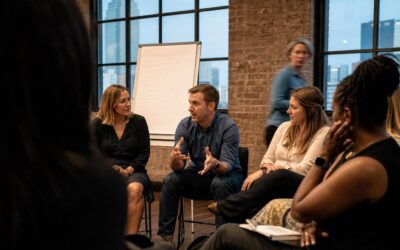
The single most useful thing we can tell you about meeting engagement: fun is not the same as participation, and confusing the two is why so many “engaging” meetings still fail. A trivia round or a chair-yoga break can look lively on camera while three people carry the entire conversation and the other nine quietly answer email. If your goal is genuine contribution, the tactics are different, more boring, and far more effective.
The stakes are not abstract. Gallup’s 2024 workplace data put U.S. employee engagement at 31 percent, a ten-year low, down from a 36 percent peak in 2020. Gallup also finds that managers account for roughly 70 percent of the variance in team engagement, which means the person running your recurring Tuesday sync has outsized influence over whether it energizes people or drains them. Globally, Gallup estimates disengagement costs around $8.8 trillion in lost productivity. Meetings are where a lot of that erosion happens in plain sight.
We plan hundreds of corporate gatherings a year, from sales kickoffs to multi-day conferences, and the difference between a room that hums and a room that endures almost never comes down to the icebreaker. It comes down to structure, facilitation, and whether the person in charge treats silence as a problem to solve rather than a failure to paper over. Here is the operator version.
Start by asking whether it should be a meeting at all
The most engaging meeting is often the one you cancel. Microsoft’s Work Trend Index has repeatedly documented meeting overload and back-to-back scheduling as a top driver of burnout, and every meeting on a calendar is a meeting competing for a finite pool of attention.
A quick filter we use with clients: if the goal is to broadcast information one direction with no decision required, it is a memo or a recorded Loom, not a live meeting. If the goal is a decision, alignment, or genuine problem-solving where the back-and-forth matters, keep it live. Status updates that could be a shared doc are the number-one culprit behind the glazed-over recurring call.
Teams that cancel the meeting but never build the async habit to replace it. Killing a status meeting without a written update ritual just moves the confusion, it does not remove it. Decide where the information will live before you delete the calendar hold.
Build an agenda that does the facilitation work for you
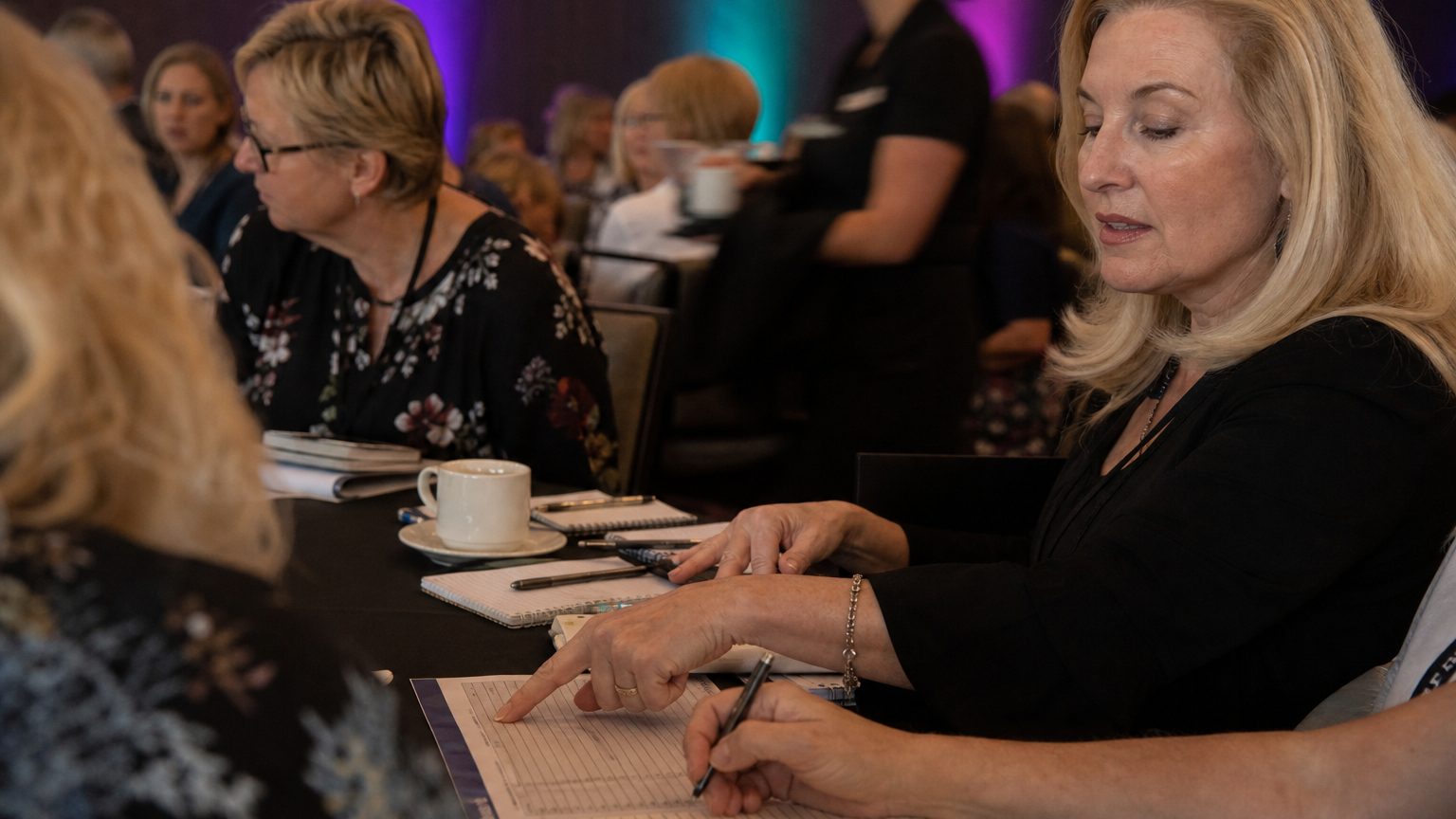
“Share an agenda in advance” is common advice; what a good one contains is not. A time-boxed agenda is not a list of topics, it is a script for how attention moves through the room.
The copy-paste structure we use
- Pre-read (sent 24 hours ahead): the two or three documents or figures people need. Not optional. If nobody reads it, that is a facilitation problem you solve in the room, not a reason to skip it.
- Desired outcome, stated in one line: “By the end we will have chosen a Q2 venue city and an owner.” Vague purpose produces vague meetings.
- Time-boxed items with an owner each: “Budget tradeoffs, 12 min, Priya.” A name next to every block kills the diffusion of responsibility that makes people check out.
- A decision or action line at the end: what was decided, who owns it, by when.
When we run multi-day conference agendas, this same discipline applies at the session level. A 45-minute breakout with no stated outcome and no named facilitator is a 45-minute drift.
The agenda that exists but nobody enforces. If the first item runs 20 minutes over and the facilitator lets it, the agenda is decoration. Assign a timekeeper who is not the meeting leader, so calling time is not a status contest.
Give people the exact words: facilitation scripts that draw participation
“Encourage participation from everyone” is advice that helps no one. Here are the mechanics we actually use.
The silent-brainstorm-then-round-robin
Instead of the open-floor “any thoughts?” which rewards the fastest talker, give everyone two minutes to write ideas silently in a shared doc or on cards. Then go person by person, one idea each, no commentary until everyone has gone. This one change surfaces the introverts and the deep thinkers who lose every real-time verbal race. Harvard Business Review’s research on brainstorming supports what facilitators have long observed: individual idea generation followed by group discussion beats freewheeling verbal brainstorming on both quantity and quality.
Direct invitation over open invitation
“Does anyone have questions?” gets silence. “Sam, you ran the last program in Scottsdale, what did you see there?” gets a real answer. Name people and route to their expertise. It signals you were paying attention to who is in the room.
Sit with the silence
After you ask a real question, count to seven in your head before rescuing the room. Most facilitators cave at two seconds and answer their own question. The pause feels excruciating and it is where the thinking happens.
The round-robin that becomes a performance review. If people feel graded on their contribution, participation curdles into defensiveness. Frame it as gathering input, not testing readiness.
Hybrid and remote engagement is a different sport
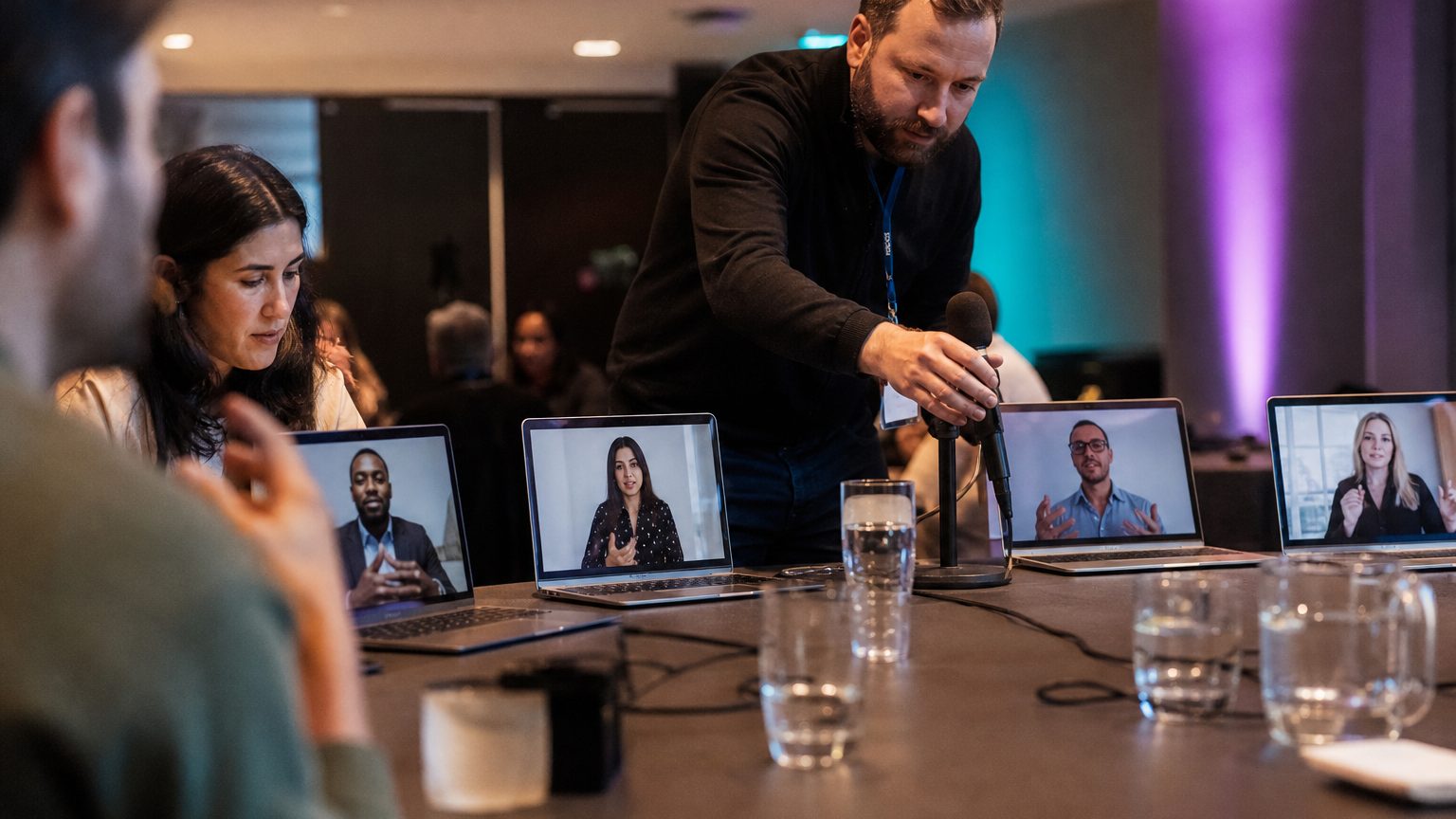
This is the biggest gap in the standard advice. A meeting with six people in a conference room and four on screens is the hardest engagement problem in corporate life, because the in-room people have every advantage: side conversations, body language, the ability to jump in without a lag. The remote four become spectators.
Voice-equity mechanics that actually work
- One person, one screen. Even in the office, have everyone join from their own laptop rather than piling around a single room camera. It flattens the presence gap instantly.
- Chat-first brainstorming. Route idea generation through the chat or a shared board so the remote participants are not fighting audio lag to be heard.
- Assign a remote advocate. One in-room person’s job is to watch the chat and the raised-hand queue and pull remote voices in. Without this role, remote attendees get forgotten within ten minutes.
- Camera and mute norms, stated once. Cameras on for discussion segments, off is fine during a long presentation, mute when not speaking. Say it, do not assume it.
- Breakout rooms of three to four. Six is too many for everyone to talk, two feels like an interrogation. Three to four is the participation sweet spot.
For programs that are fully remote or that pair a live event with a virtual audience, the production layer matters as much as the facilitation, which is why we treat virtual and hybrid event production as its own discipline rather than a bolt-on.
The “we’ll just point the camera at the whiteboard” reflex. Remote people cannot read it, cannot annotate it, and tune out. Use a shared digital board every single time there is a hybrid audience.
Fun versus genuine participation: the contrarian take
Plenty of articles will tell you to add games, trivia, and theme days. We push back. Forced fun can lower psychological safety, not raise it. The employee who dreads improv games or does not want to share a “fun fact” is now managing anxiety instead of engaging with the work. Novelty theater looks like engagement on a highlight reel and often masks its absence.
Genuine participation comes from psychological safety, the sense that it is safe to disagree, ask a naive question, or admit you are lost. That is built through how disagreement is handled and whether quieter voices get pulled in, not through Pictionary. Use activities when they serve a real goal, connection at an offsite, energy after lunch, and skip them when they are decoration.
Mistaking laughter for alignment. A room can have a great time and leave with zero shared decisions. Fun is a seasoning, not the meal.
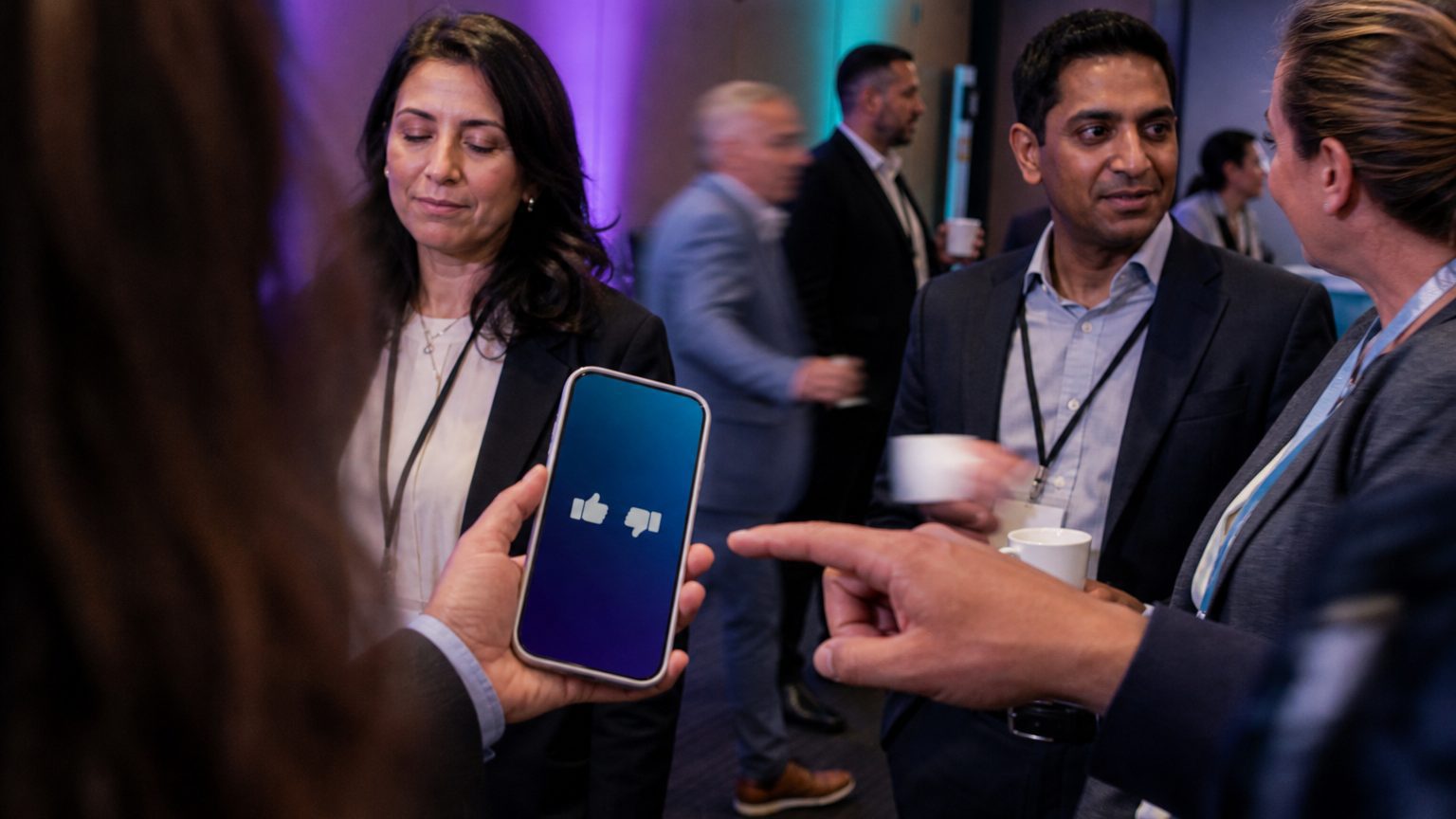
How to measure whether your meeting was actually engaging
Almost nobody measures this, which is why meetings never improve. You cannot fix what you refuse to look at. Three cheap, repeatable measures:
Talk-time distribution
Roughly, who spoke and for how long? If the two most senior people consumed 80 percent of the airtime, that is not a discussion, it is a broadcast with a Q&A. Some video platforms surface this automatically now; a note-taker tallying rough minutes works fine too.
Participation ratio
What share of attendees contributed at least once, verbally or in chat? If ten people were invited and four spoke, either the wrong six were in the room or your facilitation left them out. Both are fixable.
The two-question post-meeting pulse
Send this within an hour, anonymous, takes fifteen seconds: (1) “Did we accomplish the stated outcome?” yes or no; (2) “Did you have a chance to contribute?” one-to-five scale. Track the trend over a month. A recurring meeting where contribution scores sit at two is telling you something the room will not say out loud.
Measuring once and never again. The value is in the trend line. One pulse survey is a data point; twelve weeks of them is a diagnosis.
Design for the quiet and the neurodiverse from the start
Introverts and neurodiverse participants are not a special case to accommodate at the end, they are a design input at the start. The pre-read plus silent-brainstorm approach already does most of the work, because it removes the penalty for not thinking out loud at speed. A few additions:
- Offer multiple contribution channels: voice, chat, shared doc, or a follow-up note after the meeting. Some people do their best thinking an hour later.
- Send questions in advance, not just the agenda. Processing time is not a weakness, and the answers you get are better.
- A lightweight “how I work best” note per team member, an idea Slack popularized, tells you who prefers written prep and who thinks in real time. It costs nothing and it is why our own team leans on a decade-plus of working these dynamics rather than a template.
Equating quiet with disengaged. The person who said nothing may have written the sharpest thing in the follow-up doc. Judge participation by contribution across channels, not by who filled the silence.
Engaging meetings are not a personality trait or a bag of tricks. They are a design problem: clear purpose, a real agenda, deliberate facilitation, honest measurement, and the discipline to cancel what should not be live. If you want help applying this to a sales kickoff, a leadership offsite, or a multi-day conference where the stakes and the headcount are high, reach out to our team. We have watched these meetings succeed and fail in about forty different ways, and we would rather you land in the first group.
Further reading
For more on this topic, the Meeting Professionals International is a trusted industry resource for meeting planning standards and event industry research.
Sales Kickoffs
Sales kickoffs are a different animal than a standard internal meeting, and treating them the same is the fastest way to lose the room. Your reps are walking in with quota anxiety, comp plan questions, and a healthy skepticism of any slide that says “strategic pillars.” The job of an SKO is to send them out the door believing the number is hittable, the plan is real, and leadership actually knows what it’s doing. Engagement tactics that work for a Tuesday all-hands won’t get you there.
A few things we’ve learned running sales kickoffs on the ground:
- Cut the executive monologue in half. If your CRO is on stage for 45 minutes reading a deck, reps will check Slack. Break it up — panel format, live Q&A, or a peer top-performer sharing what actually worked last quarter.
- Build in real skill work. Role-play stations, objection-handling drills, discovery call teardowns. Reps remember what they practiced, not what they watched.
- Recognize the right people the right way. President’s Club callouts belong on the main stage. But newer reps who moved the needle also need visibility, or you signal that only the top 10% matter.
- Program the off-hours. The dinners, the receptions, the offsite activity — this is where cross-territory relationships get built and where a lot of tribal knowledge actually transfers. Don’t leave it to chance.
- End with clarity, not confetti. Every rep should leave knowing their number, their territory, their comp plan, and the top three plays they’re expected to run in Q1.
Venue selection matters more than people admit. A hotel ballroom with bad AV and a 90-minute lunch line will torpedo the agenda regardless of content. We spend real time on flow, general session production, and the small logistical details that keep energy up across a two or three-day agenda — the same discipline we bring to how we approach corporate meeting planning across the board. Get those bones right and your content has a chance to land.
Related reading: Effective Meeting Management: 6 Tips for Better Business Meetings, Company-Wide Meetings: Benefits and How to Plan Them for 2027 and How to Create a Meeting Agenda That Actually Holds Up.
FAQ
- How long should a sales kickoff be?
- Most work best at two to three full days on-site. One day isn’t enough to cover strategy, training, and recognition without gutting one of them. Four days starts to hit diminishing returns and travel fatigue.
- What’s the biggest mistake companies make with sales kickoffs?
- Overloading the agenda with executive presentations and treating training as a filler block. Reps need time to practice, ask questions, and connect with peers. If the schedule doesn’t protect that, the SKO becomes a broadcast rather than a working session.