Networking is consistently among the top-three reasons attendees give for attending corporate events — and consistently the most-disappointing element of execution at most programs. The conventional pattern is to schedule a cocktail reception, set out high-top tables, and hope attendees mix. The pattern that consistently produces strong peer-to-peer connections treats networking as a designed program element with structure, facilitation, and clear outcomes — not as an unstructured social hour. This guide is the working framework we use with corporate clients on networking design at corporate events.
(For the broader program operations framework, our corporate conferences and meeting planning page covers the full scope.)
Why Unstructured Networking Underperforms
Per the working-style research published in Harvard Business Review and the corporate-events research from MPI on attendee networking outcomes, unstructured-networking format (open reception, mingle freely, no facilitation) consistently underperforms structured-networking format on the measurable outcomes attendees actually want — meaningful peer connections, conversations with people in similar roles, and connections that persist past the event.
The reasons are predictable. Most attendees are not extroverted strangers-talkers; they default to talking to people they already know. The room’s natural energy creates noise that makes substantive conversation hard. The lack of conversational structure means most interactions stay at small-talk level. Programs that depend on unstructured networking as their primary networking element are designing against most attendees’ natural behavior patterns.
The Networking Design Categories That Work
1. Curated 1:1 Meeting Programs
Platform-supported attendee-to-attendee matching with scheduled 1:1 meetings. Brella, Whova, and Bizzabo all ship AI-assisted matching capabilities. Working pattern:
Pre-event preferences capture. Attendees indicate what kinds of connections they want (peers in similar roles, prospective customers, prospective vendors, mentors, mentees).
AI-matching based on profile + preferences.
Scheduled 15-30 minute 1:1 windows across the program. Dedicated networking lounge space; meeting calendars built into the platform.
Outcome: Attendees consistently report higher meaningful-connection counts from programs with curated 1:1 vs. unstructured.
2. Role-Based Peer Roundtables
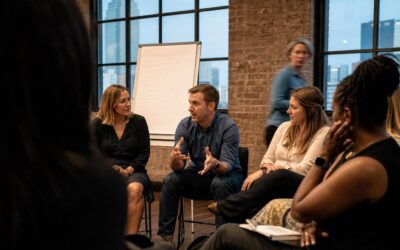
Small-group facilitated discussions among attendees in similar roles. 6-10 attendees per table, named facilitator from the company or external expert, 45-90 minute structured agenda. Working pattern:
Role-specific tables. Sales operations leaders at one table, marketing operations at another, customer success at another. Attendees self-select pre-event.
Structured agenda — 5-7 specific discussion questions the facilitator works through.
Outcomes documented. Each table produces a brief summary of insights or commitments. Strong post-event content asset.
3. Topic-Based Open Sessions
“Birds of a feather” or “Open Space” style sessions where attendees self-organize around specific topics they want to discuss. Working pattern:
Topic boards where attendees propose discussion topics pre-event or on-site.
Open-format sessions in dedicated breakout space — attendees show up to topics that interest them.
Light facilitation by company subject-matter experts to keep discussions productive.
4. Structured Reception Formats
If the program has a reception, the format can be structured even within a social context:
Conversation prompts at tables. Each high-top has a discussion question card. Attendees gathered around the table have a starting point beyond small talk.
Speed-networking format. Rotating short conversations (3-5 minutes) — works particularly well for cross-functional networking where attendees might not naturally meet.
Theme-based stations. Different reception areas oriented around different topics or interests; attendees gravitate to the topics that interest them.
Host-led tables. Named company executives or subject experts hosting specific tables; attendees gather around the hosts they want to meet.
5. Off-Site Programmed Networking
Off-property networking moments often produce stronger connections than on-property reception formats:
Curated dinners at named restaurants with mixed attendee-tables, named hosts, and pre-event seating plans.
Activity-based networking — small-group experiences (cooking class, sailing, golf, museum tour) where conversation happens naturally through shared experience.
Walking conversations — facilitated small-group walks at scenic destinations. Per the corporate-meetings research, walking-format conversations consistently produce higher conversational depth than seated-cocktail formats.
The Speaker-to-Attendee Connection
For programs with notable speakers, structured speaker-attendee connection is one of the highest-value networking moments:
Post-keynote small-group sessions. The keynote speaker spends 30-45 minutes with 10-15 attendees in a small-group format. Higher-value than a public Q&A; consistently among the most-recalled program moments.
Executive 1:1 office hours. Senior company leaders available for scheduled 15-30 minute 1:1 with selected attendees. Strong for senior-tier programs.
Speaker-hosted dinners with small attendee groups. Strong recognition signal; strong relationship-deepening element.
The Networking Platform Stack
The platforms that consistently support strong networking design:
Brella. AI-assisted attendee matching with strong scheduling capability. Strongest in the “1:1 curated matching” category.
Whova. Broader attendee app with networking features integrated alongside agenda and content. Strong all-around for mid-market programs.
Bizzabo. Enterprise-tier networking integrated with the broader event platform.
Grip. Specialized networking platform for events that prioritize networking over content. Strong for trade shows and conferences where the networking is the primary value.
The Measurement Layer
Networking that produces measurable outcomes needs measurement built in:
Post-event connection-count tracking. How many meaningful new connections did attendees report making.
Platform-level meeting metrics. Scheduled meetings completed, messaging volume, profile views.
Qualitative connection quality. Did attendees follow up with connections post-event. Survey at 30-60 days for the longitudinal signal.
Sales-pipeline signal for sponsor-attendee or peer-attendee connections. Pipeline movement attributable to event-sourced connections.
The Networking Mistake to Avoid
One pattern that consistently weakens corporate event networking: treating it as a default-on element (every event has a reception) without designing the specific networking outcomes the program is supposed to produce. The pattern that works defines the networking goal — peer connections, customer relationships, mentor introductions, cross-functional alignment — and then designs the format that produces that specific outcome. Networking as designed program is consistently higher-value than networking as default activity.
If you want help designing the networking layer of your next corporate event, our team can help. We design networking as program infrastructure rather than as an afterthought.
Related reading: Event technology guide — the platform layer for networking.
Related reading: Event strategy — the strategic charter that drives networking design.
Related reading: How to Encourage Networking at Your Next Corporate Event.