Most sales kickoff guides stop right where the hard part begins. They’ll tell you to set objectives, pick a theme, and build an agenda, then wave a hand at budget and measurement and call it a day. If you’ve actually run an SKO for 300 reps, you know the questions that keep you up at night are the ones nobody answers online: what does this thing really cost per head, what does the run of show look like at 9:47 a.m. on day two, and how do you prove to the CRO in March that it worked.
This is the guide we wish existed. It’s built from how we approach sales kickoff planning at J.Shay, plus real numbers from IRF, MPI, and Skift Meetings so you’re not planning off vibes. You should be able to build a defensible SKO from this page without opening another tab.
One framing point before we start. An SKO is not an event, it’s a campaign with an event in the middle of it. The teams that treat the two days in a ballroom as the whole program are the same ones asking in April why nothing stuck.
What a sales kickoff meeting actually is (and isn’t)
A sales kickoff is the annual meeting where a revenue org resets: new number, new plays, new positioning, and a reason for reps to believe the year is winnable. That part every competitor gets right. Here’s what they skip.
The failure mode isn’t a boring agenda, it’s an SKO with no behavior-change goal attached to it. If you can’t name the two or three rep behaviors you want different by Q2, you’re planning a party with slides. And parties are fine, they’re just cheaper than $2,000 a head.
The good news: sales enablement done well pays for itself. According to Harvard Business Review’s research on high-performing sales organizations, the difference between average and top-quartile rep behavior is trainable and repeatable, which is exactly what an SKO exists to install.
The real SKO budget: what it costs per head in 2027
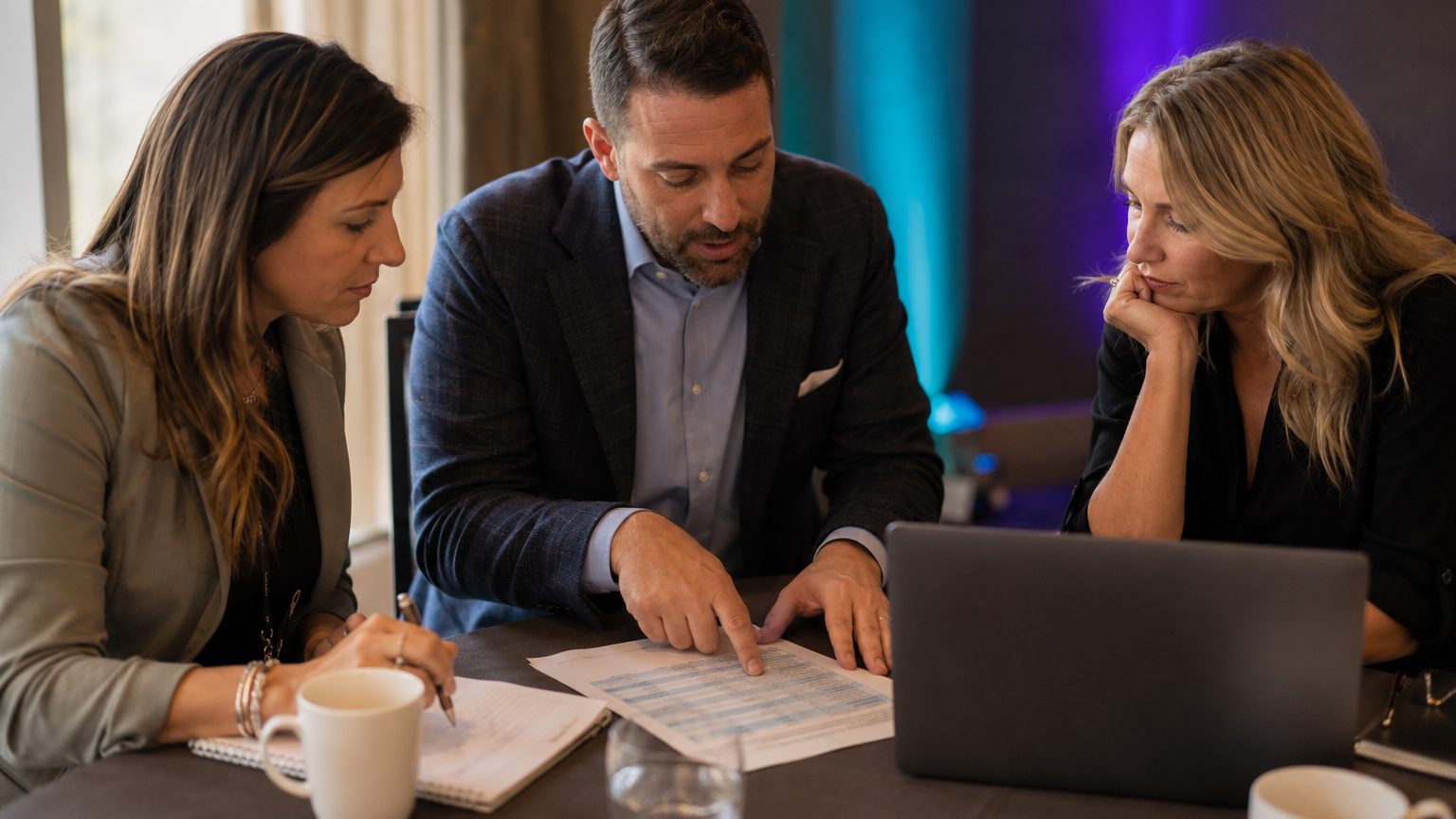
Full budget models for an SKO are hard to come by. What you usually get is a lone $500 to $2,000 travel range, or “set aside budget,” which is not help. Let’s fix that.
Start with the macro number. The MPI Meetings Outlook and broader meetings-spend tracking have shown group room rates and F&B minimums climbing well past pre-2020 levels, with double-digit annual increases across 2022 to 2024. Plan your 2027 program assuming costs are up, not flat. The planners who got burned in 2023 were the ones working off 2019 rate memory.
Per-head ranges by format
These are all-in figures from programs we’ve run, not list prices:
| Format | Cost per attendee | What it covers |
|---|---|---|
| In-person, domestic (Nashville, Austin, Phoenix) | $1,800 to $3,500 | A two to three day program, including travel, hotel, F&B, AV, and general session production. |
| In-person, resort or higher-tier city (San Diego, Scottsdale, Orlando) | $3,000 to $5,500 | Driven mostly by room rate and F&B minimums. |
| Virtual | $150 to $600 | Almost all of it production, platform, and content. Cheap on paper, expensive in attention loss. |
| Hybrid | Roughly your in-person per-head for the on-site cohort plus $200 to $500 per remote attendee, because you’re now producing two shows at once. | — |
Where the money actually goes
For a typical in-person SKO, the rough split looks like this: hotel room block and F&B eat 45 to 55 percent, air and ground travel 15 to 25 percent, AV and general-session production 12 to 20 percent, outside speakers 5 to 15 percent, and everything else (gifts, off-site event, contingency) the remainder. Production is the line people underestimate. A proper general session with staging, screens, and a show caller runs into six figures fast for a 300-person room.
What to watch out for: the attrition clause. If you block 250 rooms and pick up 190, you can owe the hotel for the gap. We routinely negotiate F&B minimums and attrition bands during sourcing, and shifting a welcome reception off a peak night has knocked minimums down by double digits more than once. The contract is where the budget is won or lost, not the agenda.
An hour-by-hour sample SKO agenda
Competitors “reference” sample agendas. Here’s a real two and a half day structure with time blocks and owners. Adapt the timing, keep the rhythm.
Day 1 — Arrival and vision
- 2:00–5:00 PM: Registration, badge pickup, hotel check-in. (Ops)
- 5:30–6:30 PM: Opening general session, CEO/CRO vision and the number. (Exec team)
- 6:30–8:30 PM: Welcome reception. Structured, not just an open bar. Put people in cross-team groups.
Day 2 — Enablement and skills
- 8:00–8:45 AM: Breakfast, sponsor/product expo open.
- 9:00–10:00 AM: Go-to-market keynote: the year’s plays and positioning. (Sales leadership)
- 10:15 AM–12:00 PM: Breakout skills tracks by segment or tenure. (Enablement + frontline managers)
- 12:00–1:00 PM: Lunch.
- 1:00–3:30 PM: Live deal role-plays and certification. This is the highest-ROI block. Reps practice, not just listen.
- 3:45–5:00 PM: Product roadmap and competitive intel. (Product)
- 7:00–10:00 PM: Awards dinner and off-site event.
Day 3 — Application and commitment
- 8:30–9:15 AM: Breakfast.
- 9:30–11:00 AM: Territory and account planning workshops. Reps build their own Q1 plan in the room.
- 11:15 AM–12:00 PM: Closing session, commitments, and the follow-up cadence. (CRO)
- 12:00 PM: Boxed lunch, departures.
What to watch out for: the day-two afternoon death slot. Right after lunch, a passive lecture will lose the room completely. That’s why the role-play block sits there, because active work beats a slide deck when blood sugar drops. If you must present in that window, keep it under 45 minutes and get them standing.
Measuring SKO ROI: the scorecard
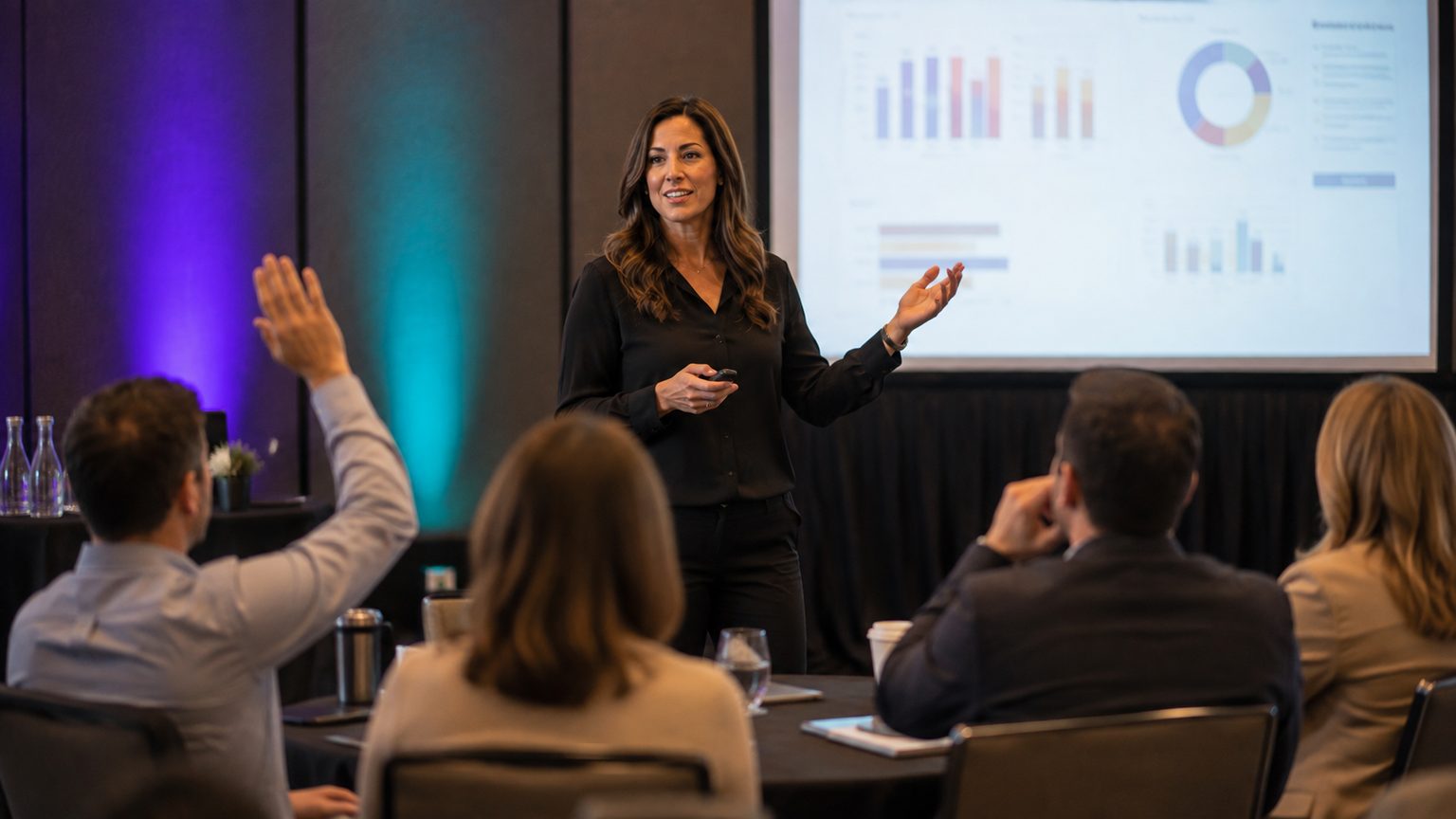
“Measure success” is the vaguest step in most SKO advice. Here’s an actual framework. Pick your metrics before the event, baseline them, then track the delta.
- Ramp time: weeks for a new rep to reach full productivity. A good SKO plus enablement should compress this. This is where sales-enablement investment shows up first.
- Quota attainment lift: percentage of reps at or above quota, Q1 pre-SKO baseline versus post.
- Pipeline generated: net-new qualified pipeline in the 60 to 90 days after kickoff, tied to the plays you taught.
- Certification pass rate: percent of reps who passed the day-two role-play. This is your leading indicator of behavior change.
- Engagement and retention: post-event survey scores plus voluntary attrition over the following two quarters.
A simple ROI read: (incremental pipeline attributable to new plays × win rate × average deal size) minus total program cost, divided by program cost. If your SKO cost $600K and drove $4M in incremental closed revenue, that’s a conversation the CFO enjoys having. The McKinsey research on sales growth and enablement consistently ties structured skill-building to measurable revenue-per-rep gains, which is the case you’re building.
What to watch out for: don’t survey satisfaction and call it ROI. A room that “loved it” tells you nothing about February pipeline. Tie at least one metric to closed revenue or you’ll be defending the budget on feelings.
In-person vs. virtual vs. hybrid: a real decision framework
Salesforce’s blanket “don’t do virtual” is lazy advice for distributed teams. The honest answer is that format is a trade-off, not a moral position.
In-person wins on energy, relationship density, and role-play quality. The Skift Meetings coverage of event effectiveness and post-2020 industry data have repeatedly documented that face-to-face drives networking and behavior change that screens struggle to match. That’s real, and it’s why we still recommend in-person for the enablement-heavy kickoff most orgs need.
But at 10 to 20 times the per-head cost of virtual, in-person has to earn it. Here’s the decision:
- Go in-person when the core goal is skill certification, new-play adoption, or rebuilding culture after a reorg. The role-play and relationship value justifies the spend.
- Go virtual when the content is mostly informational (roadmap, comp plan, number) and budget is tight. Keep it to a half day. Nobody survives eight hours on Zoom.
- Go hybrid when you have a large distributed team and want the anchor cohort in a room while regions join remotely. Budget for two productions, because a remote attendee watching a camera pointed at a stage will quietly disengage.
If a virtual or hybrid model fits your team, our virtual and hybrid event production support exists precisely because “point a webcam at the stage” is not a plan.
The backward-planning calendar: T-minus 6, 3, and 1 month
“Plan months in advance” is not a timeline. This is.
T-minus 6 months
- Lock objectives, format, and per-head budget with leadership.
- Set the date. Avoid quarter-end and the week after a major holiday.
- Start venue sourcing and issue RFPs. Good hotels in San Diego or Scottsdale for a Q1 date go fast.
T-minus 3 months
- Sign the venue contract. Scrutinize attrition, F&B minimums, and cancellation.
- Book keynote speakers and confirm the production partner.
- Draft the agenda and assign session owners.
- Open registration and launch pre-work. The learning cycle starts before anyone boards a flight.
T-minus 1 month
- Finalize run of show, AV cue-to-cue, and rooming list.
- Confirm headcount against the room block to manage attrition exposure.
- Dry-run the general session and every demo.
- Build the 90-day post-event reinforcement plan now, not after.
What to watch out for: the 18-month lead time some agencies push. For a standard 200 to 400 person SKO, 6 months is enough if you have date flexibility. It’s the peak-season resort with a fixed date that forces the long runway, not the planning itself.
Venue sourcing and RFP mechanics
Everyone hand-waves this. Sourcing is where the budget and the experience are actually decided.
Your RFP should specify exact dates plus alternates, room block by night, general session capacity in the seating style you need, breakout room count, F&B expectations, and AV requirements. Vague RFPs get vague bids, and vague bids hide the real cost.
When you compare proposals, normalize on total cost per attendee, not headline room rate. A cheaper rate with a punishing F&B minimum and paid parking can beat you on the bottom line. And read the concessions: complimentary room ratios, upgrades, and a fair attrition band are negotiable and worth real money. This is the part of conference and meeting logistics where an experienced sourcing hand pays for itself several times over. If sourcing isn’t your day job, that’s fine, it’s ours.
What to watch out for: signing before you model attrition. If your historical show rate is 80 percent, don’t block for 100 percent of invites and pray. Block conservatively and add rooms later, which is far cheaper than paying for empty ones.
Turning the event into a year-long campaign
The two days are the launch, not the finish. Reinforcement is what separates the SKOs that move the number from the ones that produce a fun photo dump and nothing else.
Build a 90-day cadence: manager-led coaching on the new plays, spaced repetition of the certification content, and a mid-quarter check on the metrics you baselined. The retention research is blunt about this. Skills taught once and never reinforced decay within weeks, so the SKO investment leaks away without a follow-up plan. If you want a partner who thinks past the closing session, here’s how we build SKO programs end to end.
Get your 2027 SKO built right
An SKO that changes rep behavior and proves its return is a design problem, not a booking problem. If you’re scoping a 2027 kickoff and want real budget modeling, an agenda that holds the room, and a measurement plan your CRO will actually respect, talk to our team about your program. We’ll tell you honestly whether in-person, virtual, or hybrid fits your team, and what it should cost. Bring your number. We’ll build the rest around it.