Here is the thing most Dallas conference guides won’t tell you: the Kay Bailey Hutchison Convention Center, the anchor of downtown citywides for decades, is in the middle of a phased teardown and rebuild that runs through the end of the decade. If you are scoping a large event for 2027 or 2028 and you assume the KBHCC works the way it did in 2019, you are planning against a building that is partly a construction site. That single fact reshapes venue selection, room blocks, and lead time for anything above roughly 3,000 attendees.
The rest of the SERP splits into two camps that each miss half the picture. You have the promo-heavy “ultimate guides” that walk you through defining objectives and building a timeline without naming a single venue or quoting a single dollar figure, and you have venue directories that list square footage but never tell you what a full conference actually costs to run. This guide sits in the middle on purpose: real numbers, named properties with real specs, and the 2029 convention center reality baked into every recommendation.
Dallas earns its place on the shortlist for reasons that hold up under scrutiny, not slogans. Two connecting airports, a deep hotel base, and no state income tax that quietly lowers your operating math. We plan multi-day corporate programs here regularly, and the city rewards planners who know where the pressure points are.
Why Dallas still works as a conference city
Air access is the honest headline. Dallas/Fort Worth International (DFW) is a top-five U.S. airport by traffic and an American Airlines hub, which means most of your attendees fly nonstop and land in the same terminal ecosystem. Dallas Love Field adds Southwest capacity for regional draws. For a national conference, that lowers the “can everyone get there Monday morning without a connection” risk that quietly kills attendance in second-tier cities.
The tax angle is real money, not marketing copy. Texas has no state personal income tax, and while that doesn’t zero out your event costs, it feeds into a lower overall cost index than gateway cities. Cvent’s destination research consistently ranks Dallas among the more affordable large-meeting markets relative to Chicago, New York, or San Francisco. You feel it most in labor, catering, and hotel rate, where the delta against a coastal city can run meaningful across a 1,000-room program.
Hotel inventory is where competitors trip over their own numbers, so let me clean it up. Depending on the source you’ll see anywhere from 35,000 to 77,000 rooms cited. The reconciliation: Dallas proper carries roughly 35,000 hotel rooms, while the broader metro (Irving, Addison, Frisco, Fort Worth) pushes toward 130,000, per Visit Dallas. For a downtown citywide you care about the walkable-to-headquarters count, not the metro figure. Book to the city number and treat the suburbs as overflow, not primary inventory.
Planners who quote the metro room count in an RFP and then discover half of it is a 25-minute drive in Dallas traffic. Anchor your block to properties within a real shuttle radius of your general session.
The Dallas conference budget breakdown, per attendee
Almost nobody in the current top results gives you a full-conference number. The one competitor that quotes anything lists roughly $75 per hour for small room hire, which is useless for scoping a 600-person program. So here is a working model based on how these budgets actually assemble.
For a mid-size corporate conference in Dallas (300 to 800 attendees, two to three days, single hotel), plan a fully loaded cost in the range of $900 to $1,800 per attendee before air and lodging paid by the attendee’s own company. The spread is wide because F&B ambition and production scale drive it. The line items that matter:
| Line item | Benchmark | Detail |
|---|---|---|
| Meeting space rental | — | Often waived or discounted against a room block and F&B minimum, not billed straight. This is the single biggest lever most first-time planners miss. |
| Food and beverage minimums | $150 to $325 | The real anchor. Budget $150 to $325 per attendee per day for full catering (breakfast, breaks, lunch, one reception). Union-free labor in Texas helps here. |
| Audiovisual and production | 15 to 30% | 15 to 30 percent of total for a general-session-heavy program. In-house AV markups are where budgets quietly bleed. |
| Service charge and tax stacking | 24 to 26% | This is the number that surprises people. A 24 to 26 percent service charge sits on top of F&B, and then sales tax applies. On a $200,000 catering spend that stack can add $55,000 or more. Model it explicitly. |
| Contingency | 10 to 15% | 10 to 15 percent. Not optional. |
On the planner-ROI question every competitor asserts without evidence: the honest version is that a good planner doesn’t save you a tidy percentage, they prevent the six-figure mistakes. MPI and industry data consistently point to attrition penalties and AV scope creep as the two costs that blow up “we’ll handle it internally” budgets. If you contract 800 room-nights and fill 600, you may owe on the gap. That’s the failure mode worth paying to avoid, and it’s how we frame the value on our conference and meeting planning work.
Where budgets actually break
We’ve seen this go sideways most often on two lines. First, the F&B minimum signed before the agenda is final: you commit to a number, then design a program with fewer catered touchpoints, and now you’re buying food you don’t need to hit the minimum. Second, AV scope creep. The general session grows a second screen, then confidence monitors, then a rehearsal day, and the “quoted” AV number is 40 percent light by show day. Lock scope in writing before you sign.
Choosing a Dallas venue by headcount
Venue directories list specs. They rarely translate them into a decision. Here’s the map we actually use when matching a program to a property.
Under 200 attendees: boutique downtown
For an executive summit or a focused sales meeting, the Statler and the Kimpton Pittman in downtown and Deep Ellum give you design-forward space without a cavernous ballroom you’ll pay to heat and never fill. The trap at this size is over-buying space; a 200-person meeting in a 1,000-person ballroom feels dead, and you’re carrying rent and AV for a room you can’t fill.
200 to 1,000 attendees: full-service convention hotels
This is the sweet spot for Dallas, and the properties are genuinely strong. The Hilton Anatole carries around 1,600 guest rooms and expansive meeting space including a large exhibit hall, which makes it a single-roof solution that avoids shuttle logistics entirely. The Omni Dallas is connected by skybridge to the convention center and runs roughly 1,000 rooms. Fairmont Dallas and the Gaylord Texan (technically in Grapevine, near DFW) round out the tier. Single-roof properties are your friend here, they collapse transportation, security, and attendee-wrangling into one building.
Citywide, 5,000-plus: the convention center question
Above roughly 3,000 to 5,000 attendees you need convention-scale space, and in Dallas that has historically meant the KBHCC. Which brings us to the part of this guide that no competitor has touched.
Planning around the KBHCC 2029 rebuild
The Kay Bailey Hutchison Convention Center is being rebuilt, not renovated. The official convention center master plan lays out a new footprint of roughly 2.1 million square feet with an approximately 800,000-square-foot exhibit hall and a 105,000-square-foot ballroom, with the new facility slated to open around 2029 to 2030. In the interim, the site is under phased demolition and construction, and something on the order of 50 conventions are already booked into the completed building for 2029 and beyond.
For planners this creates a squeeze. If you want true citywide space in downtown Dallas for 2027 or 2028, you are working around active construction and reduced availability. Our guidance:
- Citywides for 2027 to 2028: consider the Gaylord Texan or Irving Convention Center as interim large-format options, or split your program across two connected downtown hotels rather than forcing the KBHCC.
- Citywides for 2029 and later: get in the queue now. The new building is already filling for its opening years, and the best dates go to groups that committed early.
- Sustainability credentials worth citing to your CSR stakeholders: the KBHCC was the first Food Recovery Network-certified convention center and has donated more than 11,000 meals, with the new build designed to LEED standards. That’s concrete authority, not a generic “go paperless” tip.
A downtown hotel sales team quoting you convention center access as if the building is fully operational. Ask specifically which halls are available on your exact dates and get it in the contract.
Lead time: reconcile the contradictory advice
You’ll read “9 to 12 months” on one guide and “12 to 18 months” on the next, both unsourced. The real answer is segmented by scale, and it’s tighter than most people admit for smaller programs.
- Citywides (5,000+): 18 to 24 months minimum, and honestly longer given the construction squeeze on downtown Dallas space through 2029.
- Mid-size corporate (300 to 1,000): 6 to 12 months is workable if you have date flexibility. The 18-month rule everyone repeats is overkill at this size unless you’re locked to specific peak dates.
- Executive and small (under 200): 3 to 6 months is often fine.
Season matters more in Dallas than the guides admit. Summer heat (July and August routinely clear 100 degrees) softens demand and rate, so a June-through-August program can negotiate hard. Watch the sports and convention calendar for collisions, and note that FIFA World Cup 2026 matches in the metro will compress hotel availability and spike rates on affected dates well into peak periods. If your 2027 dates brush against major regional events, confirm inventory before you fall in love with a week.
RFP and contract mechanics competitors skip
This is the operator content the SERP is missing entirely. When you send an RFP, the terms that decide whether your budget holds are not the headline room rate.
- Attrition clause: negotiate the allowable shortfall (aim for 15 to 20 percent slippage before penalties) and tie it to a realistic pickup, not an aspirational one.
- Cutoff date: the date unsold rooms release back to the hotel. Set it as late as the property will allow, typically 3 to 4 weeks out.
- Comp room ratio: one free room per 40 or 45 paid is standard; push for 1:40.
- Service charge and tax: get the exact stacking in writing, because 26 percent service plus tax turns a “reasonable” F&B quote into a number you didn’t budget.
For groups that want a local partner running these negotiations on the ground, that’s exactly what our Dallas event management team handles day to day.
Getting attendees around
DART light rail connects downtown, and the free downtown streetcar and D-Link routes handle short hops between the convention district, the Arts District, and Deep Ellum. For most corporate conferences you’ll still charter shuttles between hotel and venue rather than rely on transit, but DART matters for attendees who want to explore on their own time. From DFW, budget 25 to 40 minutes to downtown depending on traffic; from Love Field, 15 to 20.
Bringing it together
Dallas is one of the more forgiving large-meeting markets in the country right now: strong air access, deep hotel inventory, favorable cost math, and a genuinely strong set of convention hotels. The one caveat that separates a smooth program from a scramble is the convention center rebuild, and now you know to plan around it. Match your headcount to the right property tier, model the service-charge stack honestly, and set lead time by scale rather than by whatever number a listicle repeated.
Conference Planning
Conference planning is production work, not a checklist. When we take on a conference in Dallas, we start with the outcome the host organization actually needs — sponsor renewals, member retention, a product launch that lands, a board meeting that doesn’t unravel — and we build backward from there. Venue, room blocks, F&B, AV, general session flow, breakouts, transportation, signage, staffing, and the run-of-show all get sequenced against that outcome. If a decision doesn’t serve it, we cut it.
Here’s what conference planning actually looks like on our side of the table:
- Sourcing and contracting. Venue and hotel selection based on real attendee patterns, not the prettiest floor plan. We read attrition, F&B minimums, cancellation, and force majeure clauses before we sign, and we push back where the risk sits on the host.
- Program build. Session grid, speaker management, breakout logistics, and traffic flow between rooms so 800 people aren’t trying to move through a single corridor at 10:15.
- Registration and attendee comms. Clean data in, clean badges out. Pre-event emails that people actually open because they contain information they need.
- Production and AV. General session staging, screens, audio, comfort monitors, cue-to-cue, and a stage manager who’s run this before.
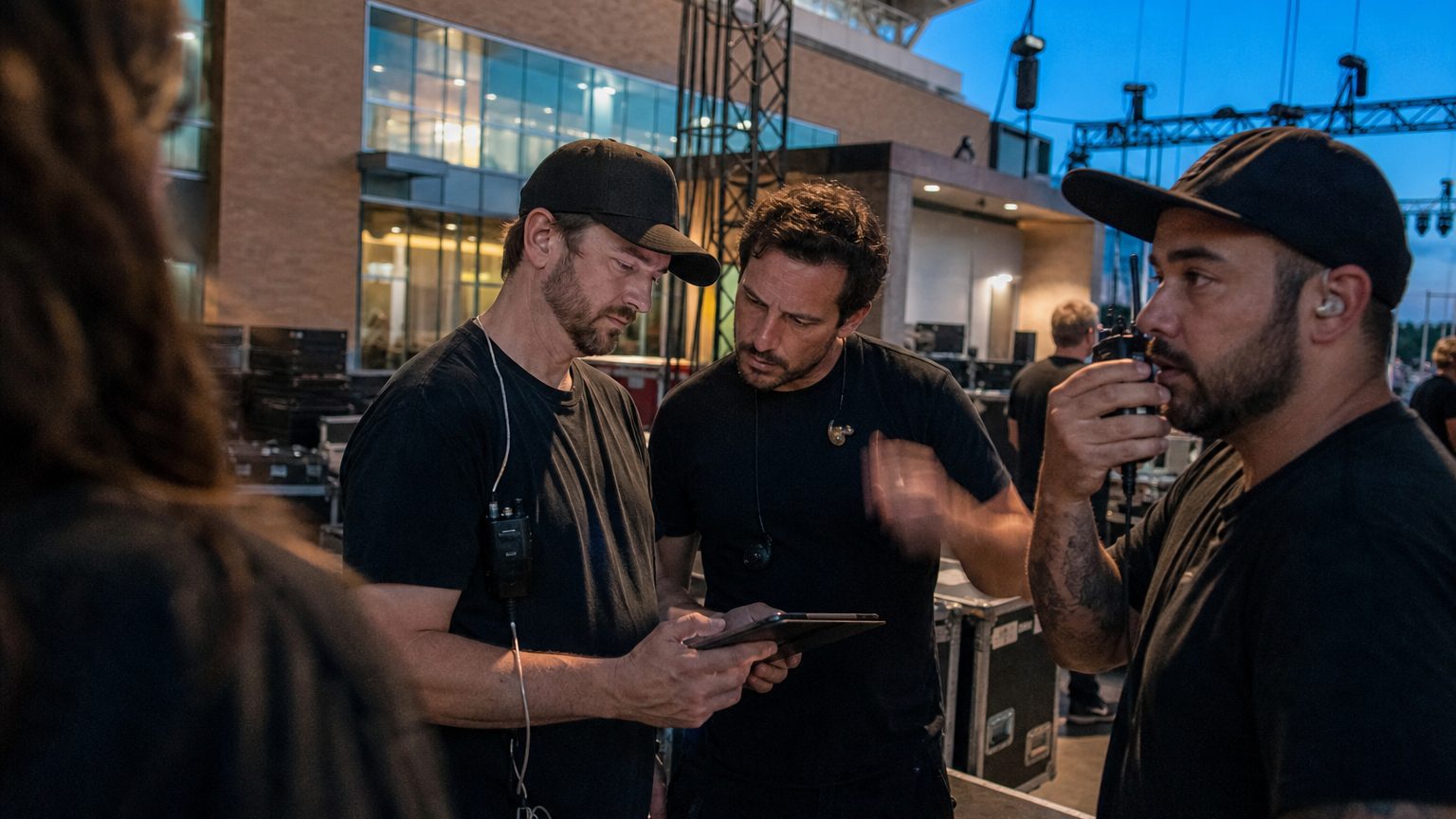
- On-site operations. A staffed command center, radio protocol, credentialed team, and a documented escalation path when something goes sideways at 6:47 a.m.
- Reconciliation. Final BEO review, invoice audit, and a post-event debrief that includes numbers, not adjectives.
Dallas adds its own variables — DFW versus Love Field arrival splits, downtown versus Las Colinas versus Frisco venue tradeoffs, and the reality that August outdoor receptions are a bad idea no matter what the venue rep tells you. We plan around those specifics rather than treating the city as generic meeting space. If you want more context on how we run the full scope of corporate programs here, our Dallas event management practice covers the operating model in detail.
Conferences fail quietly for weeks before they fail loudly on show day. Planning is the work that prevents the loud part.
FAQ
- How far in advance should conference planning start?
- For a conference of 300+ attendees in Dallas, 12 to 18 months is realistic. That window gets you competitive venue holds, better hotel rates, and enough runway to build the program without shortcuts. Under six months is possible but narrows your venue options considerably.
- What’s the difference between a conference planner and a meeting planner?
- Scope. Meeting planning typically covers a single-day or single-track event with straightforward logistics. Conference planning involves multi-day programming, general sessions, concurrent breakouts, sponsor activations, and coordinated hotel blocks — meaning the operational load and contract exposure are substantially higher.
Talk to us about your Dallas program
If you’re scoping a conference in Dallas for 2027 or 2028, the earlier we’re in the room, the more room we have to negotiate attrition, F&B, and dates around the construction squeeze downtown. J.Shay Events plans corporate conferences and multi-day meetings across the metro, and we’d rather help you avoid the six-figure contract traps than clean them up later. Reach out to our team and let’s map your program to the right venue and budget.